Watch the reel
A bear call spread sells one call and buys a higher call to collect premium with capped risk. This reel shows how it pays you to bet a stock stays below a level you choose.
Bear Call Spread
Sell a call and buy a higher-strike call. Net credit, defined-risk, neutral-to-bearish. You profit if the underlying stays below the short strike.
Payoff at expiration
Example legsGreeks
When to use it
Neutral-to-bearish view, elevated IV, and you want defined risk. Often used to fade an extension or sell premium against a known resistance level.
Setup
Sell a call at 0.20–0.30 delta above current price, buy a further-OTM call to define risk. Spread width determines collateral + max loss.
Steps
- 1Pick an expiration 30–45 DTE.
- 2Sell the short call at or above a resistance level.
- 3Buy a long call further OTM to cap risk.
- 4Submit as a single combo order at a limit near the mid.
Cost
Net credit. Max loss = strike width × 100 − credit.
Effect of price
Sideways or down = full max profit. Above the short strike, the credit erodes; above the long strike, you're at max loss.
Effect of time
Theta-positive — time works for you.
Effect of volatility
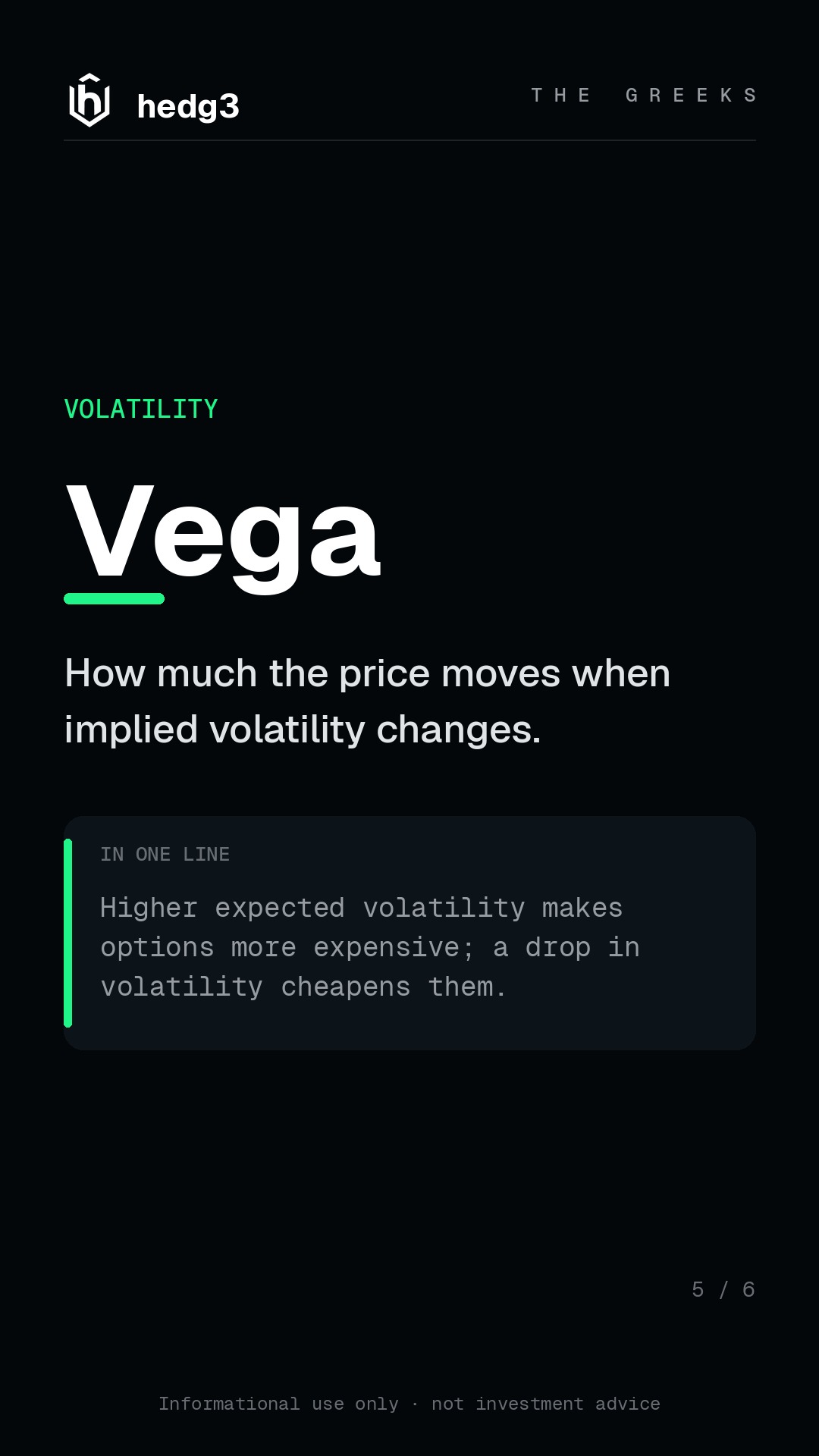
Negative vega — open in elevated IV.
Pros
- Defined risk.
- High probability of profit.
- Generally cleaner than a bear put spread because call IV is often richer than puts in upward trends.
Cons
- Risk/reward is unfavorable per trade — relies on win rate.
- Gap-up earnings or news can blow through both strikes.
- Requires collateral equal to spread width.
Tips
- Use resistance levels or moving averages to pick the short strike.
- Close at 50% of max credit.
- Skip earnings unless you understand and accept the gap.
The math
Max profit = credit. Max loss = (long_strike − short_strike) − credit. Break-even = short_strike + credit.
Not investment advice.