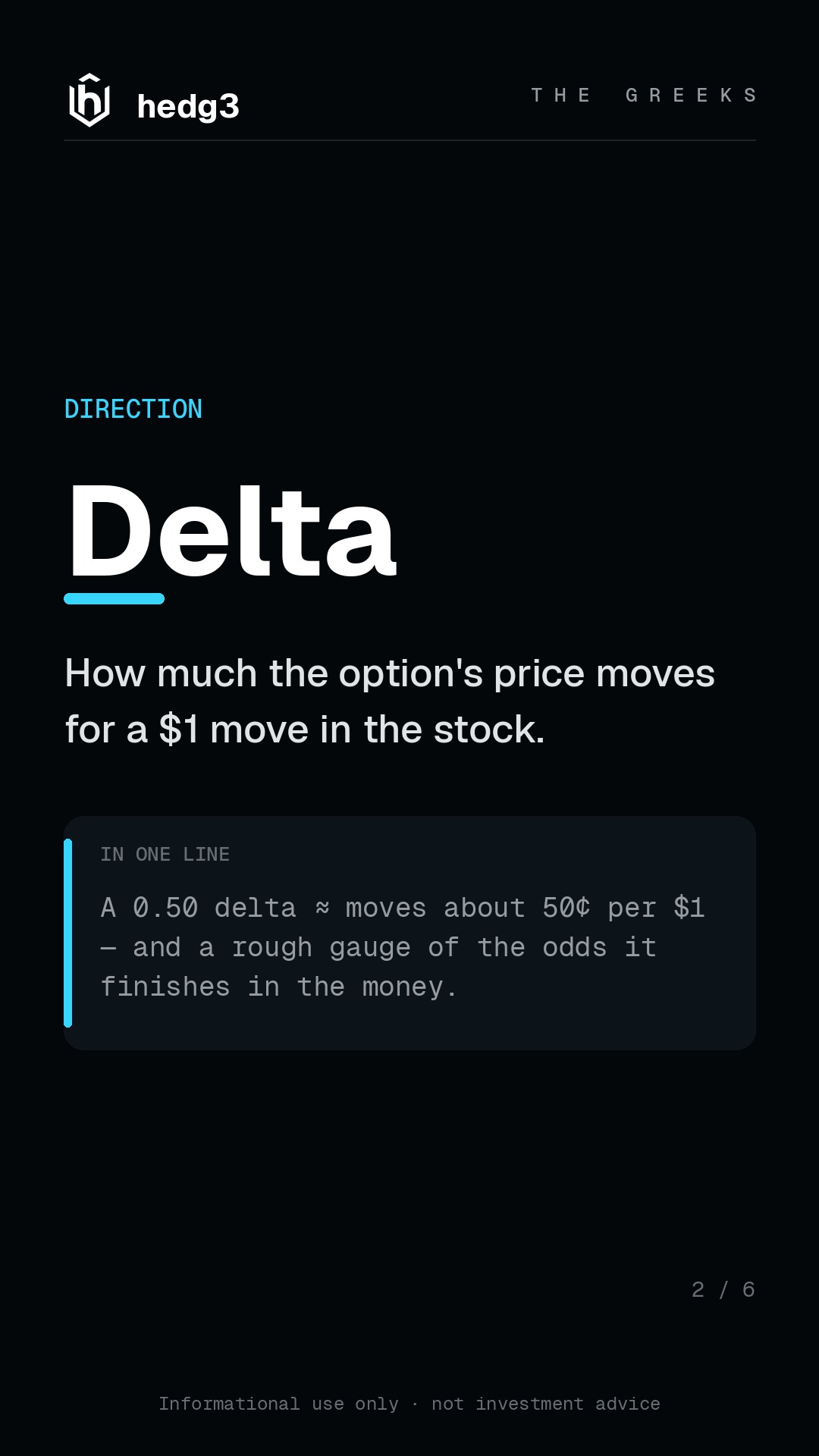
Watch the reel
A bull call spread buys one call and sells a higher call, defining both your risk and your reward. This reel shows how it makes a moderate-upside bet cheaper than a single long call.
Bull Call Spread
Buy a call and sell a higher-strike call in the same expiration. You're net-debit, defined-risk, and you've traded uncapped upside for a lower cost basis.
Payoff at expiration
Example legsGreeks
When to use it
You're moderately bullish — you expect a move up to a specific target, not a moonshot. Useful when IV is elevated (the short call subsidizes the long).
Setup
Pick the long strike where you want to start being long (often ATM or slightly OTM). Pick the short strike at your price target. Wider spreads cost more and pay more; tighter spreads are cheaper and lower-reward.
Steps
- 1Pick an expiration that covers your thesis (30–60 DTE is typical).
- 2Buy the lower-strike call.
- 3Sell the higher-strike call (your price target).
- 4Submit as a single combo order at a limit near the mid.
Cost
Net debit = long call premium − short call premium. That's also your maximum loss.
Effect of price
Profit grows as the underlying rises toward the short strike, then caps. Below the long strike at expiration, you lose the full debit.
Effect of time
Mostly theta-neutral at the money — the long and short calls decay at similar rates. As the stock approaches the short strike, the short leg's theta starts working in your favor.
Effect of volatility
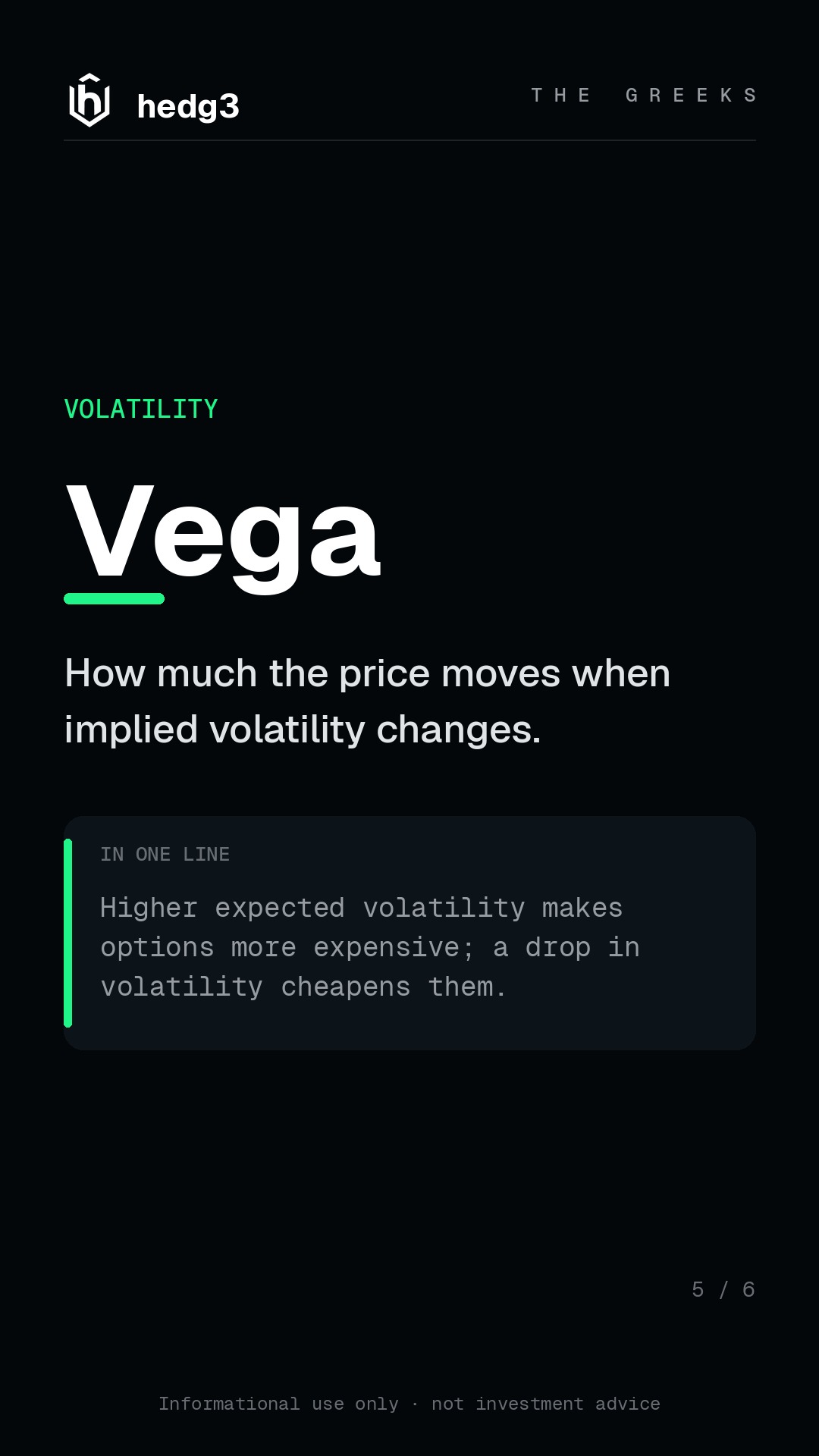
Roughly vega-neutral, so vol matters less than for a long call. Helpful when IV is elevated.
Pros
- Lower cost than an outright long call.
- Defined risk and defined reward — easy to size.
- Less vega exposure makes it more robust around earnings.
Cons
- Capped upside above the short strike.
- Lower delta than a long call — needs a more efficient move.
- Two commissions instead of one (negligible at most brokers).
Tips
- Target your short strike at a realistic price target, not a hope.
- Close at 50–75% of max profit to free up capital.
- When the stock blows through your short, consider rolling the short up to recapture upside.
The math
P/L per share at expiry = min(spot − long_strike, short_strike − long_strike) − debit, floored at −debit. Break-even = long_strike + debit. Max profit = (short_strike − long_strike) − debit.
Not investment advice.