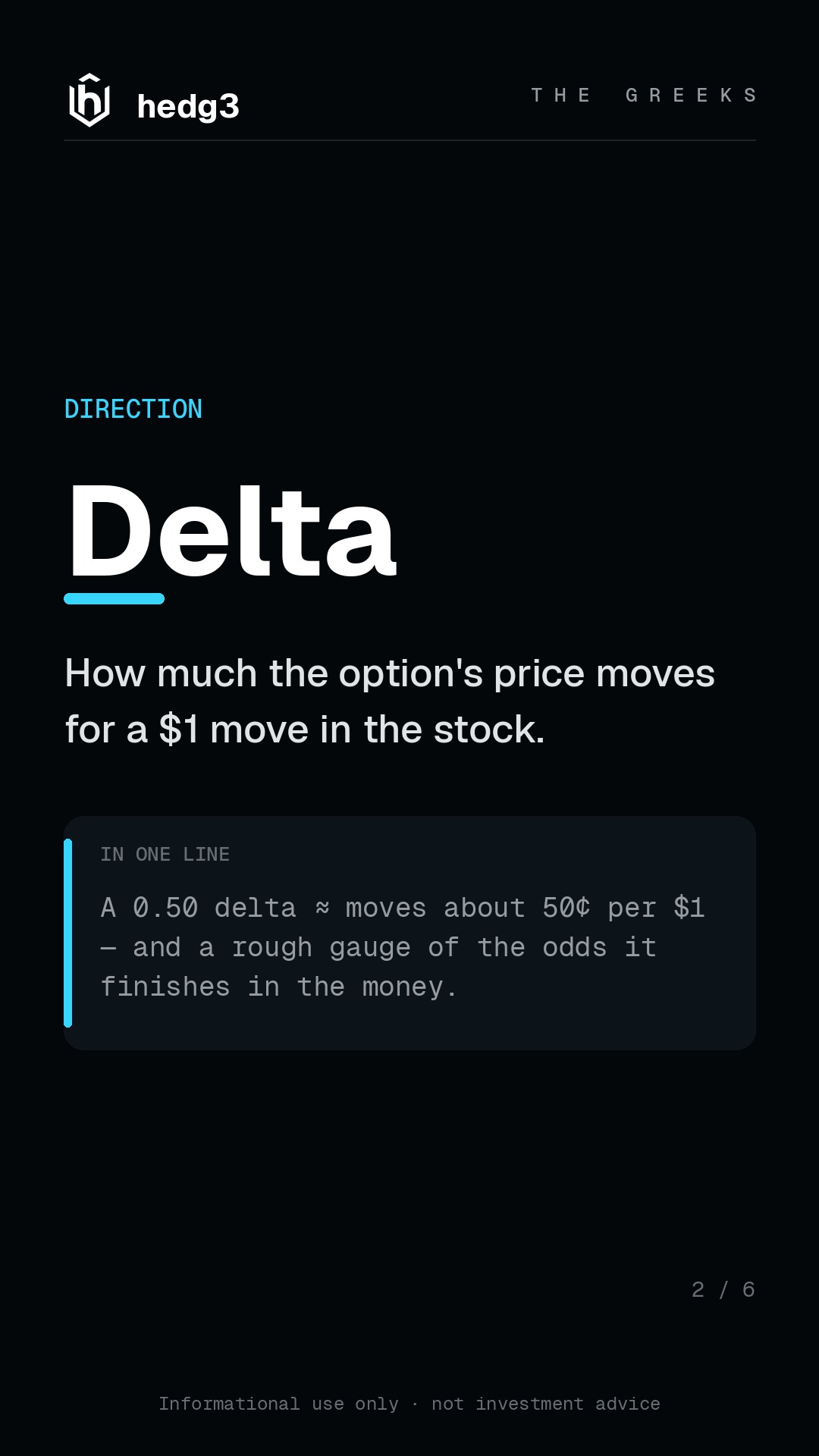
Watch the reel
A cash-secured put means selling a put while setting aside the cash to buy the shares if assigned. This reel shows how it lets you collect premium or buy a stock at a price you choose.
Cash-Secured Put
Sell an out-of-the-money put while holding enough cash to buy 100 shares at the strike if you're assigned. You collect a credit; if the stock stays above the strike at expiration, you keep it. If not, you buy the stock at an effective price of strike − premium.
Payoff at expiration
Example legsGreeks
When to use it
You want to enter a long position at a discount to the current price, or you want to generate income on cash you'd be comfortable putting to work in the underlying.
Setup
Pick a strike at or below where you'd happily own the stock, 30–45 days out, typically 0.20–0.30 delta. Set aside the full collateral (strike × 100 − premium received) so you can take assignment without forced selling.
Steps
- 1Decide the strike at which you'd be a happy buyer of the underlying.
- 2Confirm you have the cash to take assignment.
- 3Sell a put at that strike 30–45 DTE.
- 4Either close early at 50% profit, roll before expiration, or take assignment.
Cost
No cash outlay beyond the collateral. You collect a credit. The real cost is opportunity cost on the collateral plus the obligation to buy if the stock falls.
Effect of price
Flat or rising is ideal — the put decays and expires worthless. A sharp drop below the strike either assigns you the stock or forces a roll/close at a loss.
Effect of time
Theta is your engine. The short put decays every day the underlying behaves.
Effect of volatility
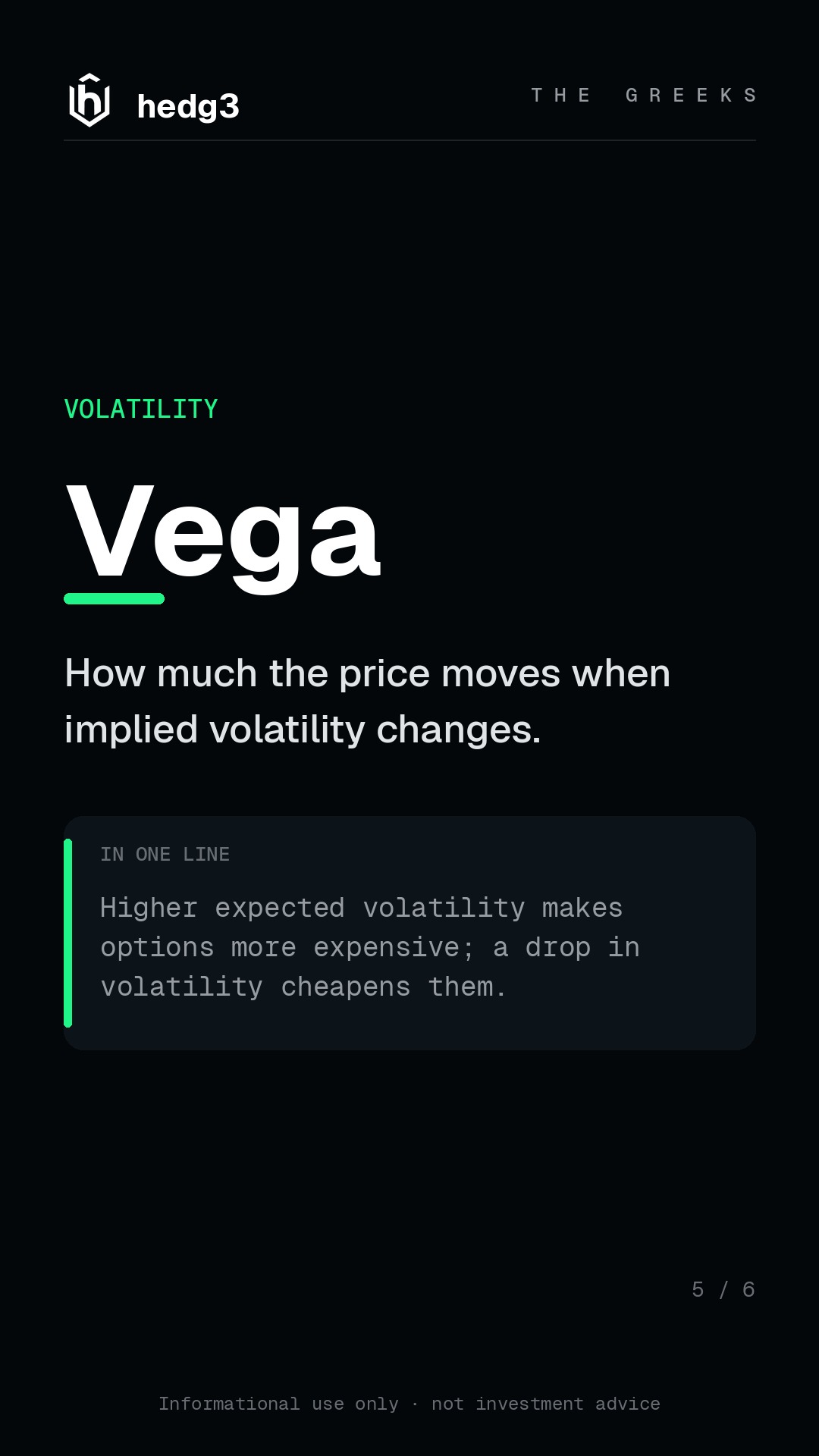
Negative vega. Selling in elevated IV improves the credit and benefits from mean reversion.
Pros
- Income on cash you're not deploying yet.
- If assigned, your effective entry is below the market price at sale.
- Conceptually identical risk profile to a covered call.
Cons
- Big loss if the stock crashes — capped only by the stock going to zero (max loss = strike − premium).
- Ties up significant collateral.
- Capped upside: you only collect the premium.
Tips
- Only sell puts on names you genuinely want to own at the strike.
- Diversify — don't load all your cash collateral into one ticker.
- Close at 50% profit and redeploy; that's where the risk-adjusted edge lives.
The math
P/L per share at expiry = premium − max(strike − spot, 0). Break-even = strike − premium. Maximum profit = premium (at any spot ≥ strike). Maximum loss = strike − premium (if spot = 0).
Not investment advice.