Watch the reel
A collar protects shares you own with a put and pays for it by selling a call — capping both your downside and your upside. This reel shows how to fence in a position you want to hold.
Collar
Own 100 shares, buy a protective put, and sell a covered call to help finance the put. You've defined both downside (put strike) and upside (call strike).
Payoff at expiration
Example legsGreeks
When to use it
You're long the stock, you want defined downside (catalyst, earnings, just risk-off), and you're willing to cap upside in exchange for cheaper insurance.
Setup
Put strike at your downside floor. Call strike at your upside cap (or where you'd happily sell). Pick same expiration; aim for the call credit to roughly offset the put debit (a 'zero-cost collar').
Steps
- 1Confirm you own 100 shares per collar.
- 2Pick the put strike at your acceptable downside.
- 3Pick the call strike at where you'd happily take profits.
- 4Submit as a single 3-leg combo order at or above zero net cost.
Cost
Net debit or credit depends on the strikes. A zero-cost collar costs nothing up-front but caps both ends.
Effect of price
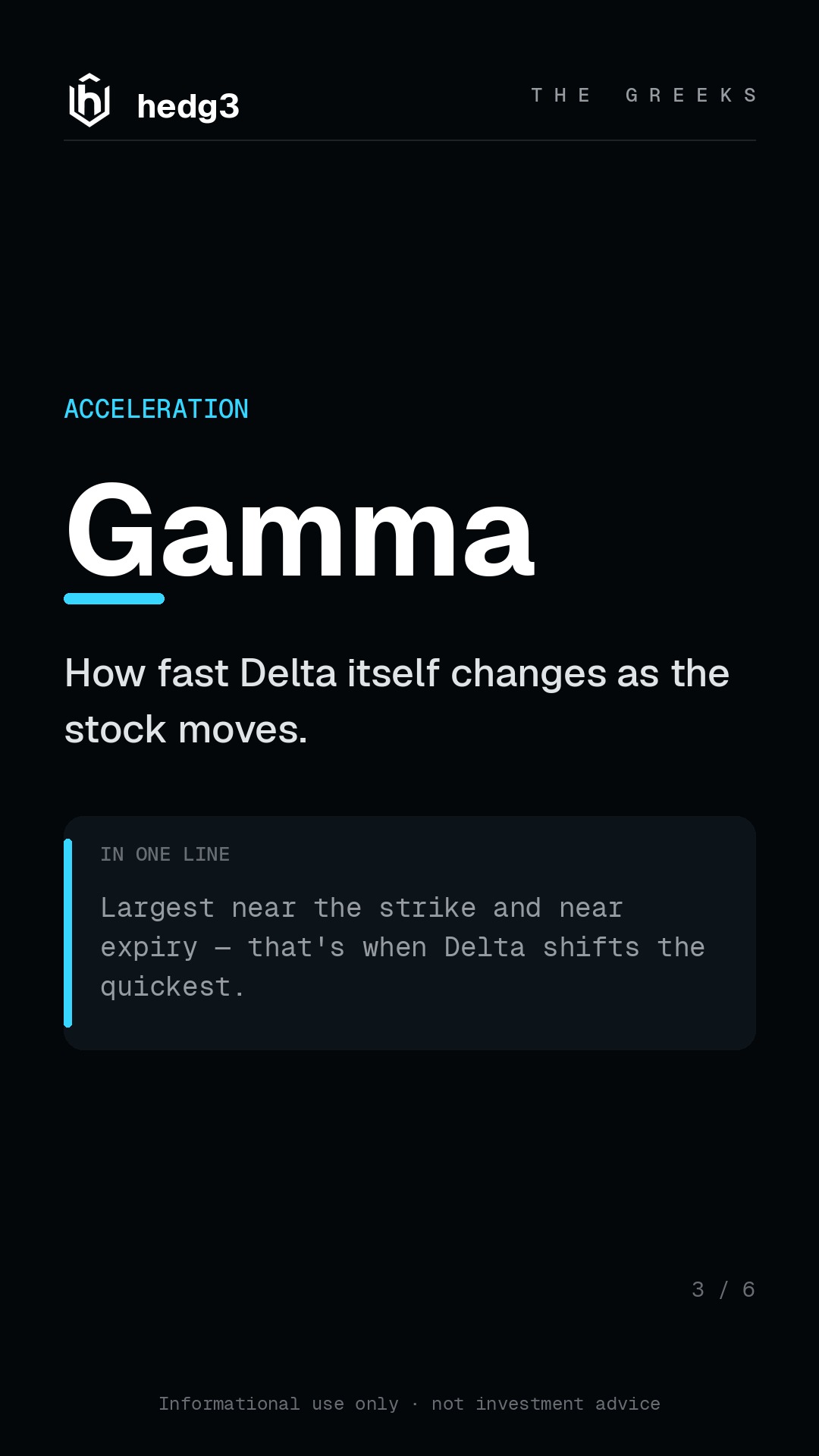
Between the strikes you get full stock P/L. Below the put strike you're hedged; above the call strike you're capped.
Effect of time
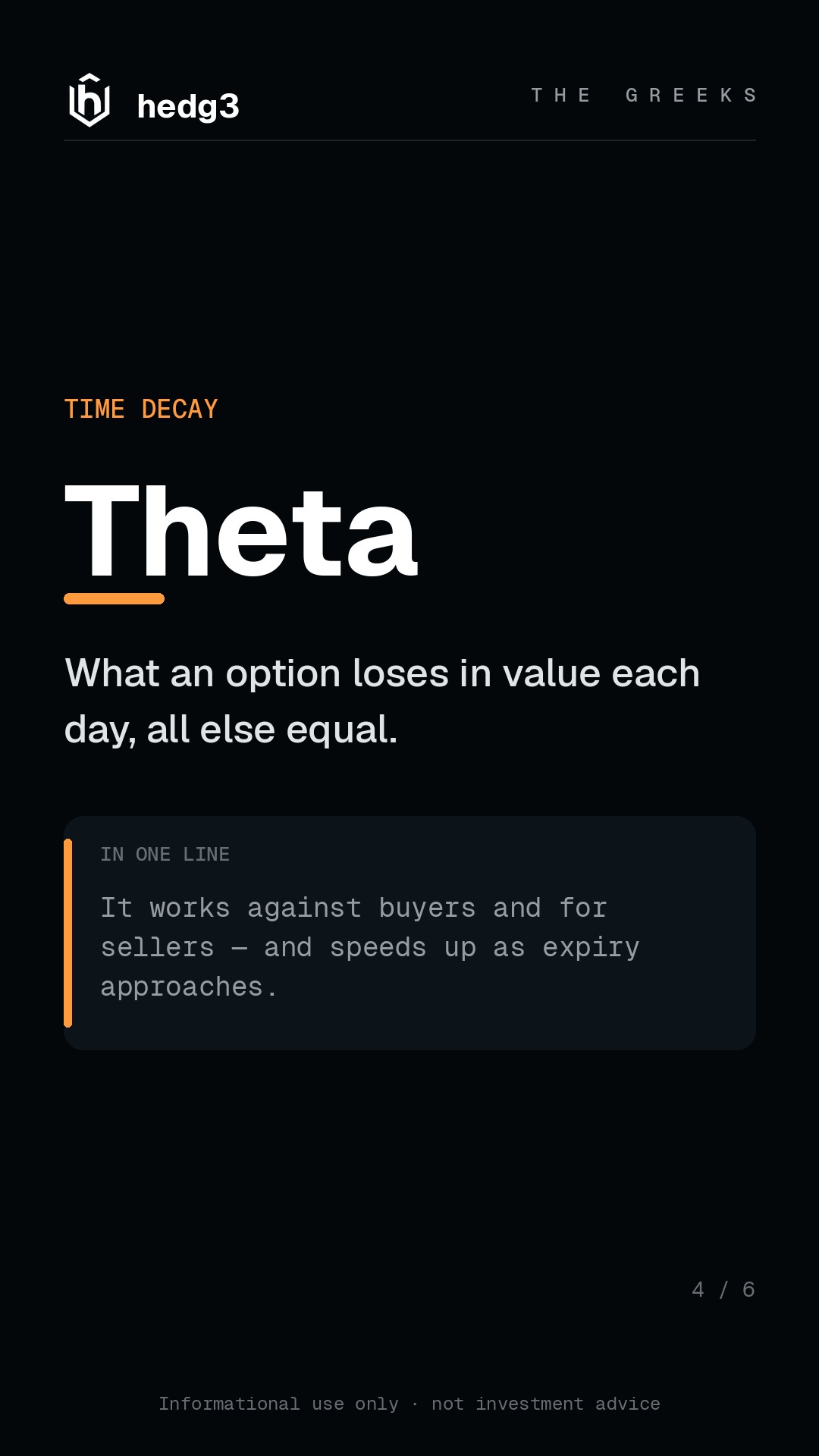
Roughly theta-neutral when initiated symmetrically.
Effect of volatility
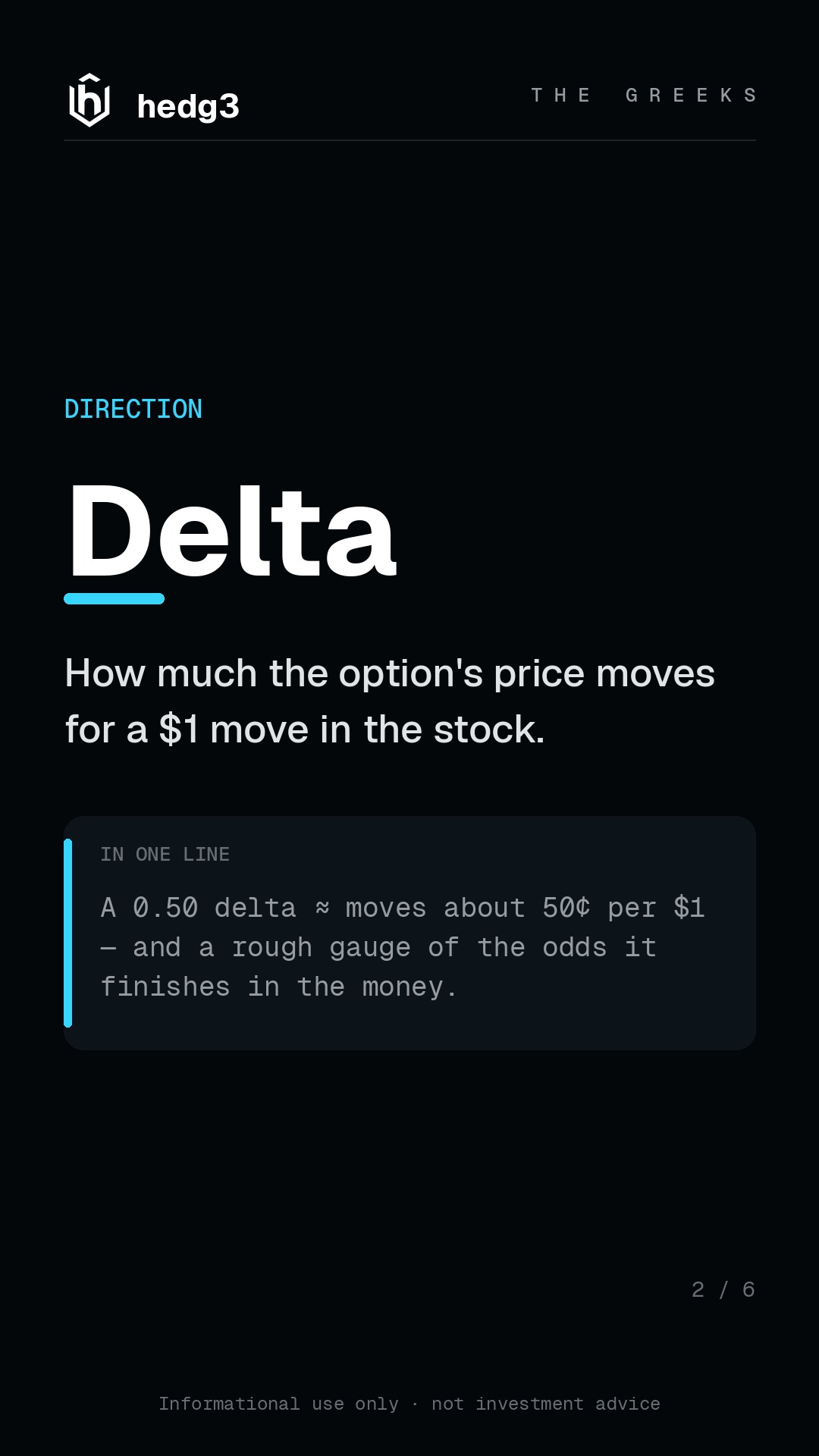
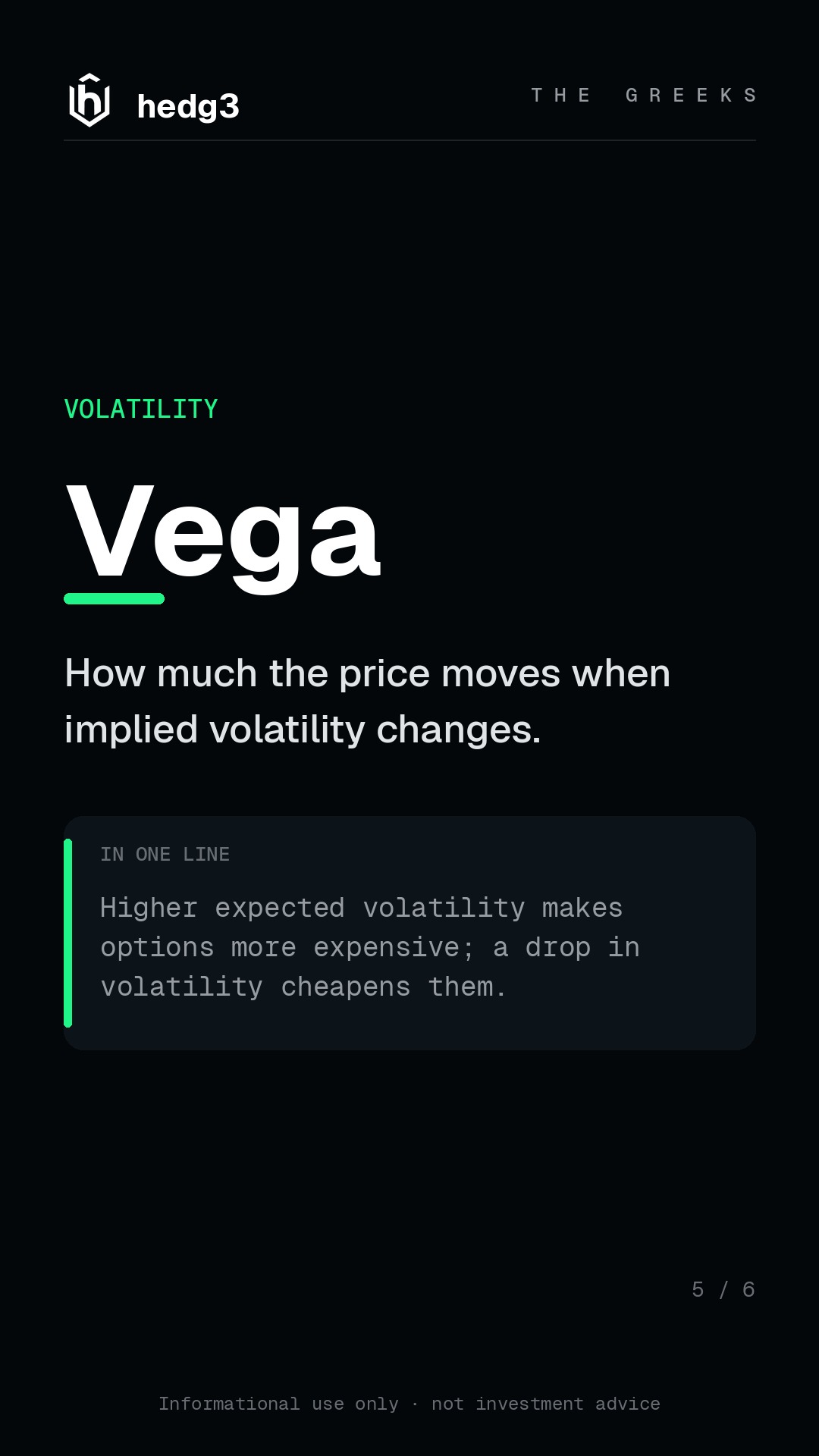
Roughly vega-neutral when symmetric — the long put's positive vega offsets the short call's negative vega.
Pros
- Cheap protection — the short call funds the long put.
- Defined floor and ceiling.
- Keeps the long stock position for tax, dividend, or conviction reasons.
Cons
- Capped upside.
- Get-assigned-on-the-rally risk.
- Three legs = more tickets to manage.
Tips
- If you genuinely don't want to sell the stock, set the call strike above any realistic 30-day target.
- Roll the collar at expiration to maintain ongoing protection.
- For a zero-cost collar, the call strike has to be tighter than you might want — adjust your downside if so.
The math
P/L per share at expiry = clamp(spot, put_strike, call_strike) − basis − put_premium + call_premium. Max gain = call_strike − basis − put_premium + call_premium. Max loss = basis − put_strike + put_premium − call_premium.
Not investment advice.