Watch the reel
A covered call means owning shares and selling a call against them to collect premium. This reel covers the trade-off: extra income now in exchange for capping your upside.
Covered Call
Own 100 shares of the underlying, then sell one out-of-the-money call against them. You collect the call premium as income; in exchange you cap your upside above the strike.
Payoff at expiration
Example legsGreeks
When to use it
You're long-term bullish but expect range-bound to slowly rising price action, want regular yield from existing positions, or want to lower your effective cost basis on a position you already own.
Setup
Sell a call 30–45 days out, typically at 0.20–0.30 delta. Closer-to-money calls collect more premium but cap upside sooner; further OTM keeps upside but pays less.
Steps
- 1Confirm you own 100 shares per call you intend to sell.
- 2Pick an expiration 30–45 DTE for the best premium-to-decay ratio.
- 3Pick a strike above your willing-to-sell price, typically 0.20–0.30 delta.
- 4Plan your roll: close + reopen at 50% profit, or before assignment if you want to keep the stock.
Cost
No new cash outlay — you collect a credit. Your real 'cost' is the foregone upside above the strike + the maintenance work of rolling.
Effect of price
Slowly rising or flat price is ideal. Sharp rallies leave money on the table above the strike. Sharp drops are partially cushioned by the premium you collected, but you still bear the stock's downside.
Effect of time
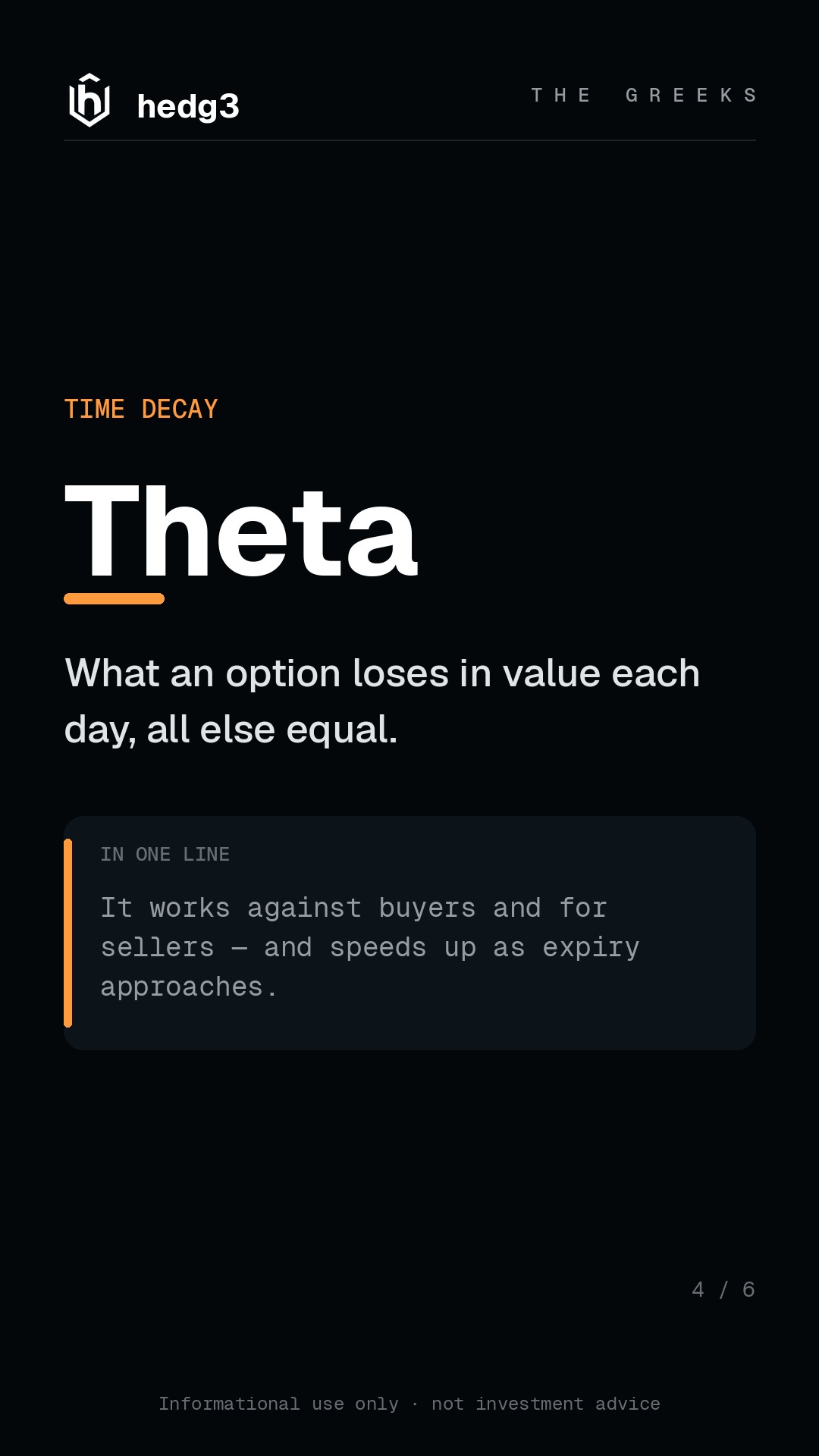
Theta works for you. The short call decays daily — that decay is your income.
Effect of volatility
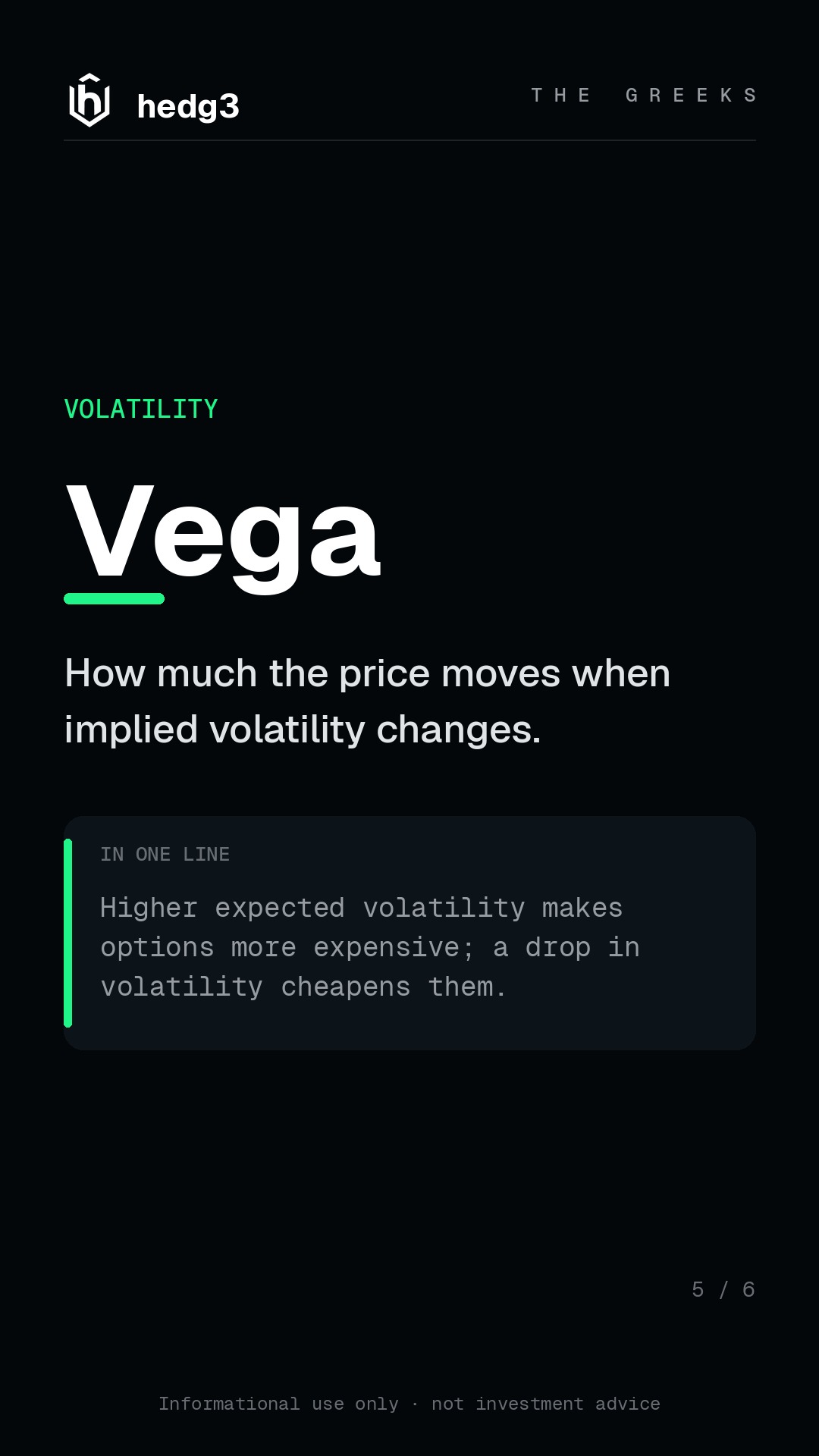
Negative vega. A vol spike hurts the current position; a vol collapse helps. Many sellers prefer to open in higher IV and let mean reversion + theta do the work.
Pros
- Generates consistent income from a position you already own.
- Lowers effective cost basis over time.
- Theta-positive — time is on your side.
Cons
- Caps upside; you give up the moonshot.
- Still fully exposed to downside in the underlying.
- Requires capital to own 100 shares per contract.
Tips
- Don't sell calls below your cost basis — assignment locks in a loss.
- Avoid earnings weeks unless you've priced in the gap risk.
- Roll early at 50% profit to free up gamma for the next cycle.
The math
P/L per share at expiry = min(spot − basis, strike − basis) + premium. Break-even = basis − premium. Maximum profit = strike − basis + premium (at any spot ≥ strike).
Not investment advice.