Watch the reel
A long call is a bullish bet with risk capped at the premium you pay and upside that's uncapped. This reel explains when buying a call beats buying the stock outright.
Long Call
Buying a call option gives you the right (not the obligation) to purchase 100 shares of the underlying at the strike price on or before expiration. It's a leveraged way to express a bullish view with capped downside — your maximum loss is the premium paid.
Payoff at expiration
Example legsGreeks
When to use it
You expect the underlying to rise meaningfully before expiration and you want defined-risk exposure that costs less than buying shares outright. Long calls shine when implied volatility is reasonable and the move you're expecting is large relative to the premium.
Setup
Pick a strike near the money (ATM) for balanced delta, slightly out of the money (OTM) for cheaper leverage, or in the money (ITM) when you want a higher delta and lower time decay. Expiration should comfortably exceed your conviction window — too short and theta dominates.
Steps
- 1Choose an expiration that gives the thesis time to play out.
- 2Pick a strike that matches your conviction (ATM for balanced, OTM for leverage).
- 3Place a limit order at or below the mid-price; never market-order options.
- 4Define an exit plan up-front: profit target, time stop, and stop on the underlying.
Cost
You pay the option's premium. That's also your maximum loss. Break-even at expiration is strike + premium.
Effect of price
Profits rise approximately one-for-one with the underlying once you're past the break-even point. Below the strike at expiration, the call expires worthless.
Effect of time
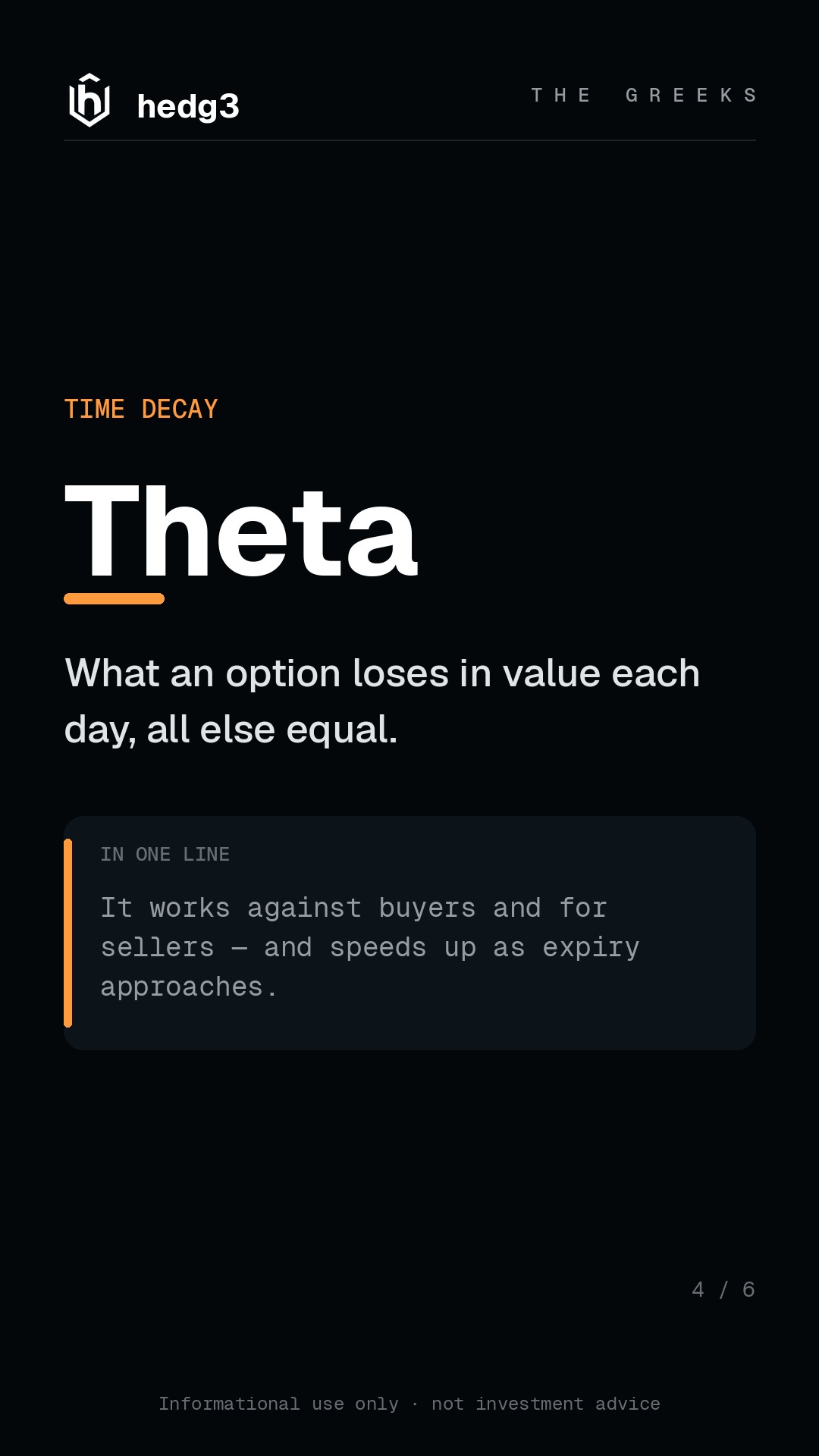
Time decay (theta) works against you. Each day the underlying does nothing erodes some extrinsic value — most aggressively in the final 30 days.
Effect of volatility
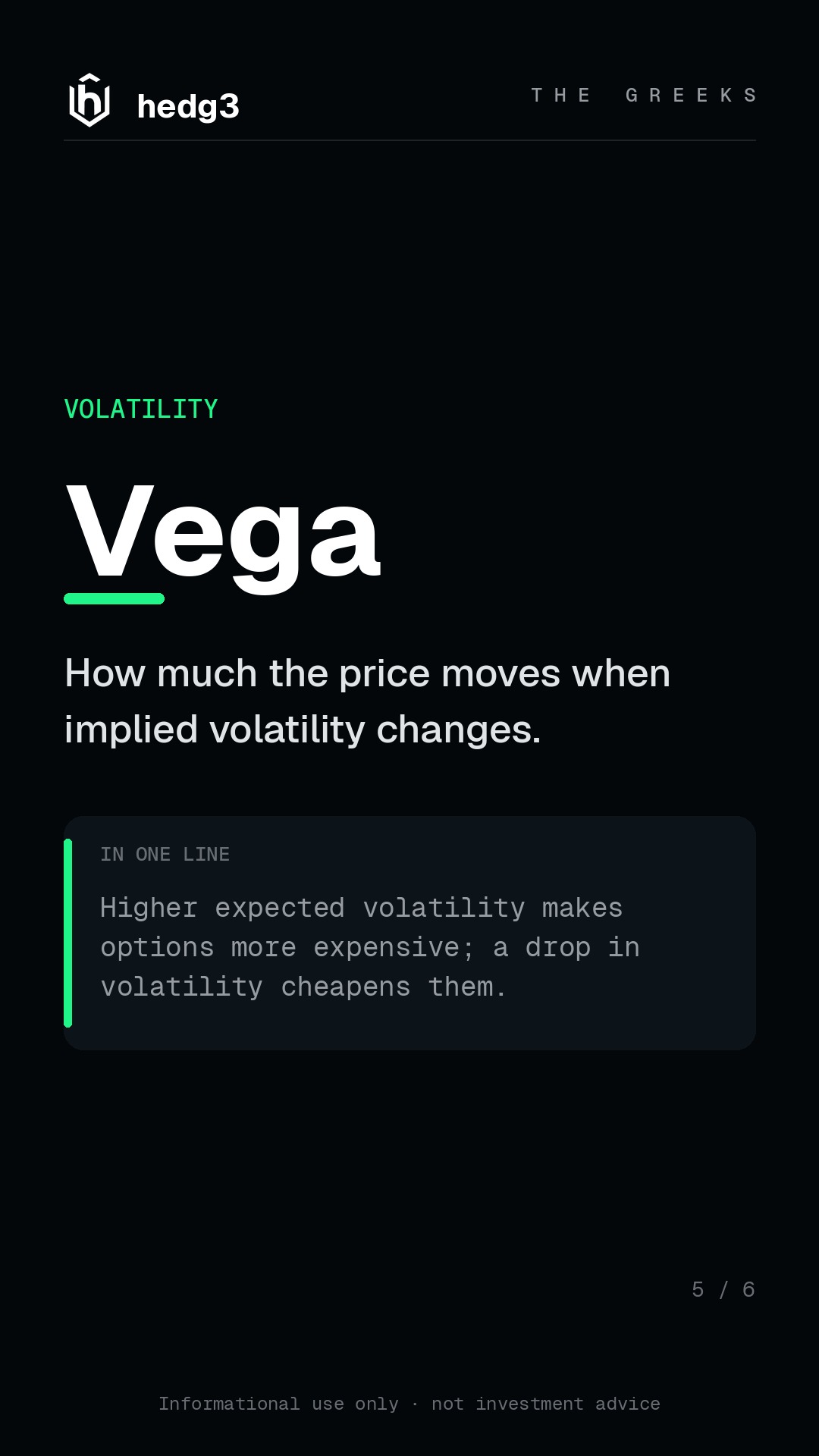
Higher implied volatility raises the premium (positive vega). A pop in IV can offset modest price action; an IV crush (e.g., after earnings) can wipe out gains even if the stock moves in your favor.
Pros
- Capped downside: maximum loss is the premium paid.
- Significant leverage: small capital outlay controls 100 shares.
- Simple thesis: just bullish.
Cons
- Theta decay erodes value daily, especially in the last month.
- Vol crush can wipe out gains even on a correct directional call.
- Statistically, OTM long calls expire worthless more often than not.
Tips
- Don't buy calls into earnings unless you've priced in the IV crush.
- Avoid weekly OTM lotteries — the math is brutal over time.
- Sell or roll on the way up rather than holding to expiration.
The math
P/L per share at expiry = max(spot − strike, 0) − premium. Break-even = strike + premium. Maximum loss = premium (occurs at any spot ≤ strike at expiry).
Not investment advice.