Watch the reel
A long put profits as a stock falls, with risk capped at the premium paid. This reel covers using a put to bet on a decline or to protect shares you already own.
Long Put
Buying a put gives you the right to sell 100 shares of the underlying at the strike price on or before expiration. It's the defined-risk way to be bearish — or to hedge a long position you don't want to sell.
Payoff at expiration
Example legsGreeks
When to use it
You expect the underlying to fall, you want to insure an existing long position, or you want to express a bearish view without short-stock margin and unlimited upside risk.
Setup
Pick a strike near the money for balanced sensitivity, OTM for cheaper insurance / leveraged speculation, or ITM when you want higher delta. Match expiration to the timeframe of the move you expect — and remember puts are typically richer than calls thanks to the put skew.
Steps
- 1Choose an expiration that comfortably exceeds your thesis window.
- 2Pick a strike based on the magnitude of the move you expect.
- 3Limit-order at or below the mid; verify the bid-ask spread is tight.
- 4Decide in advance how you'll exit on a rip up or once the thesis plays out.
Cost
You pay the put's premium. That's your maximum loss. Break-even at expiration is strike − premium.
Effect of price
Profits grow as the underlying falls below the break-even; above the strike at expiration, the put expires worthless.
Effect of time
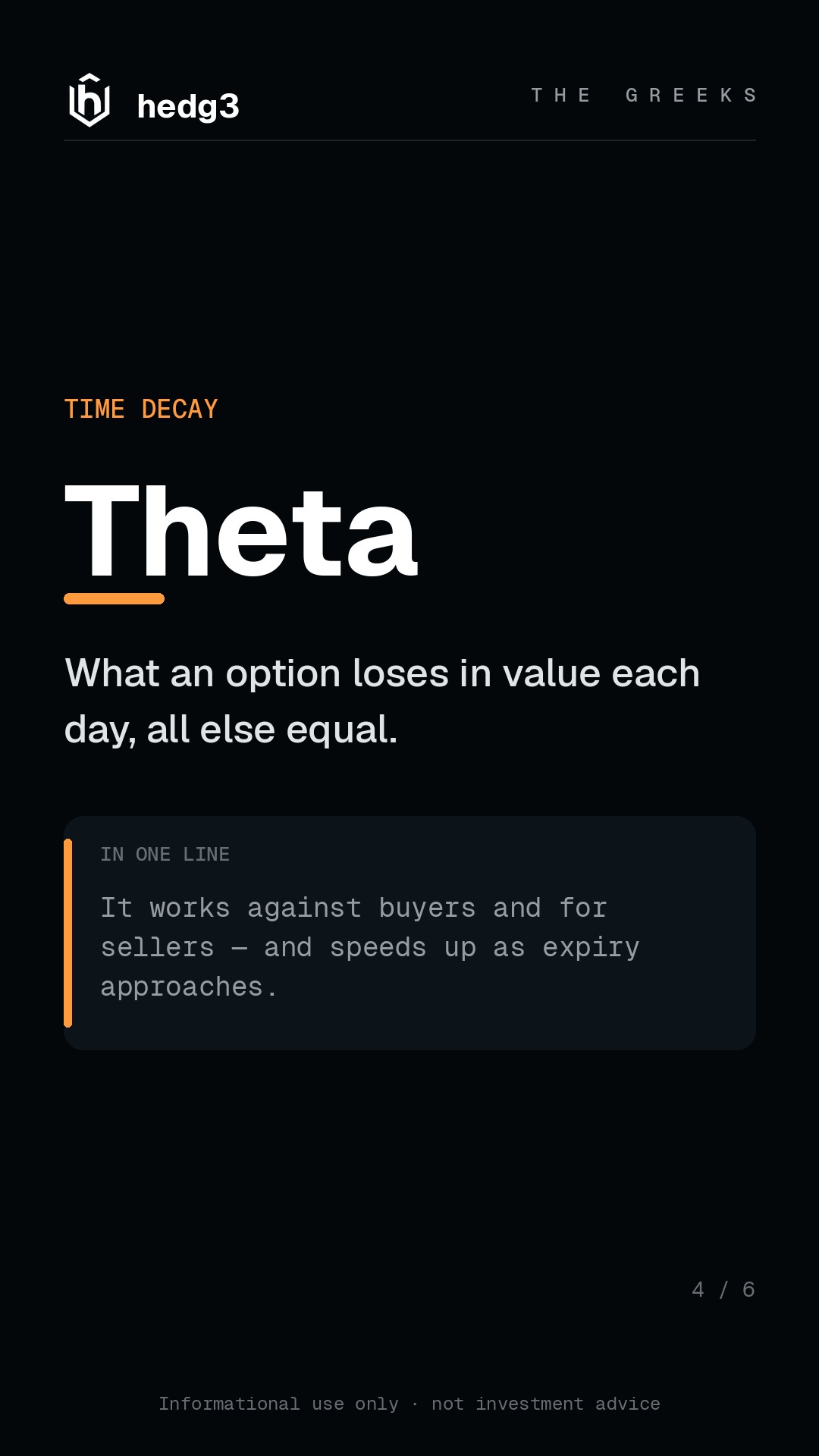
Theta works against you. Long puts decay every day the stock stalls, which is why they're a poor 'set and forget' bet.
Effect of volatility
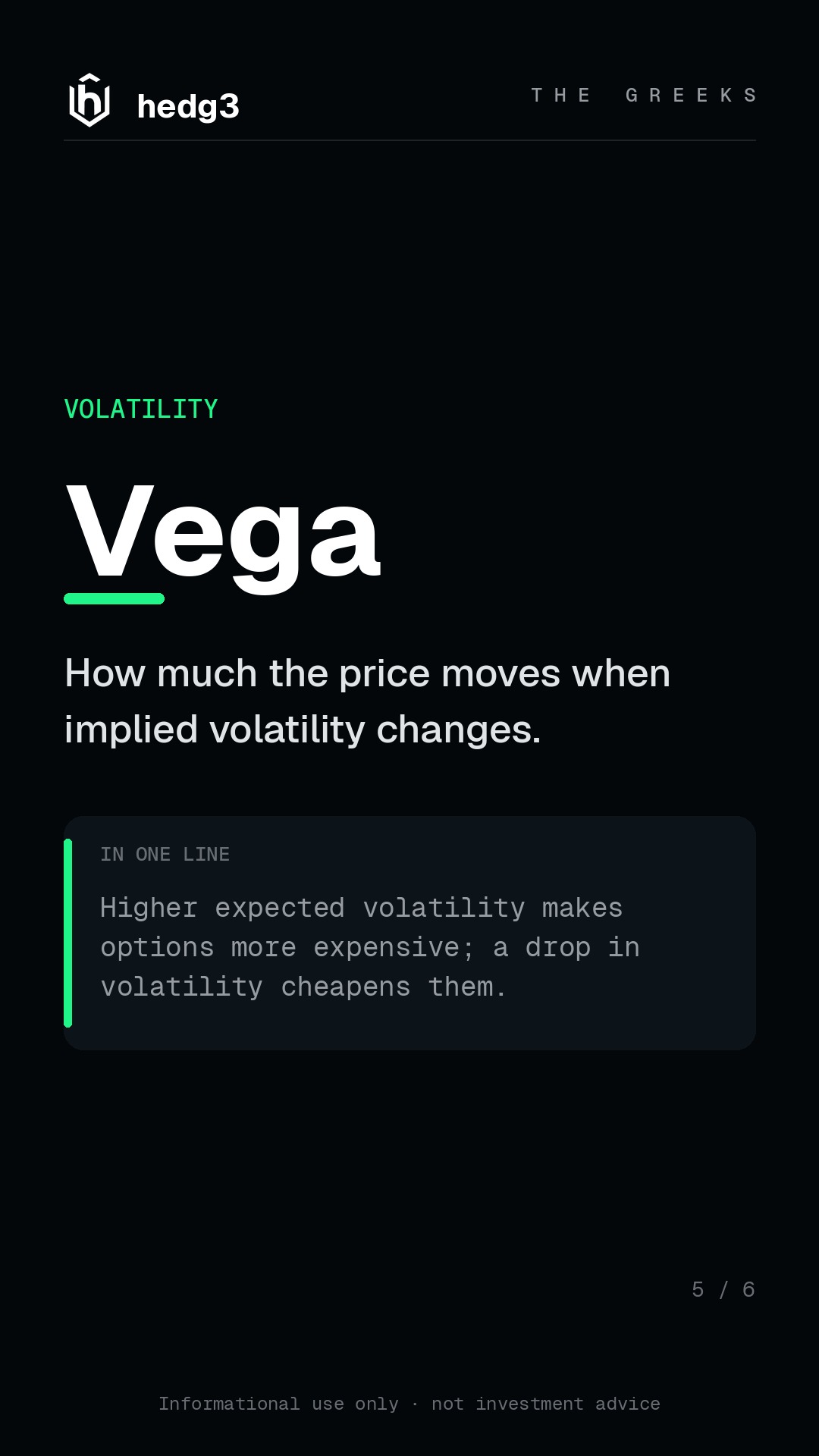
Positive vega — a rise in implied vol helps. Puts on weak names often carry rich IV because that's where the demand is.
Pros
- Defined downside: maximum loss is the premium.
- Cleaner than short-selling: no borrow fees, no margin call risk, no infinite loss.
- Doubles as portfolio insurance on a single long position or an index hedge.
Cons
- Time decay punishes patience.
- Put skew makes them structurally more expensive than equidistant calls.
- If the underlying drifts sideways, vol can compress and erase value even without a rally.
Tips
- For insurance, prefer longer-dated puts and roll forward — short-dated insurance is expensive.
- Watch IV percentile. Buying puts when IVR is already in the 80s often pays you in vol but loses on the move.
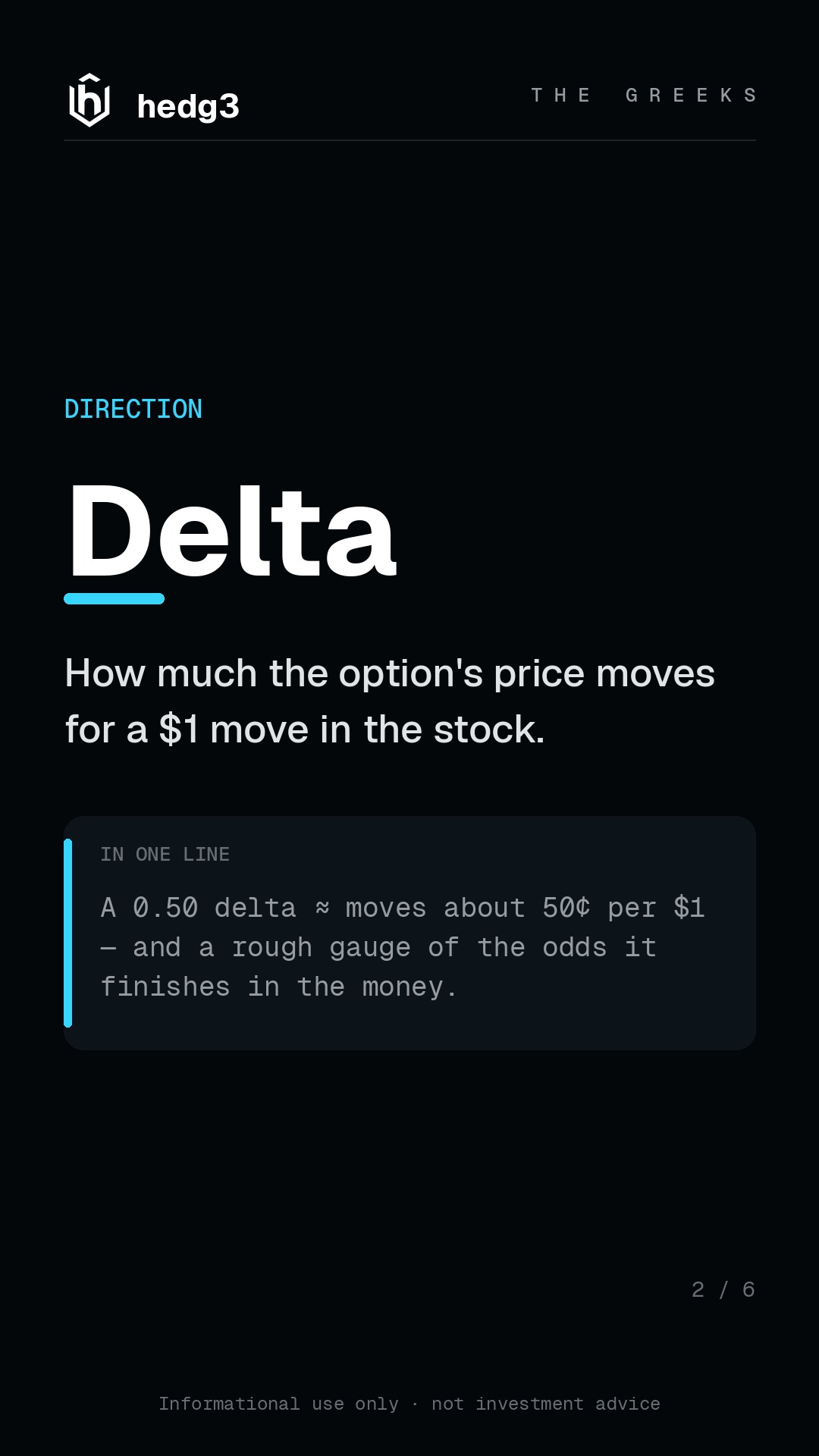
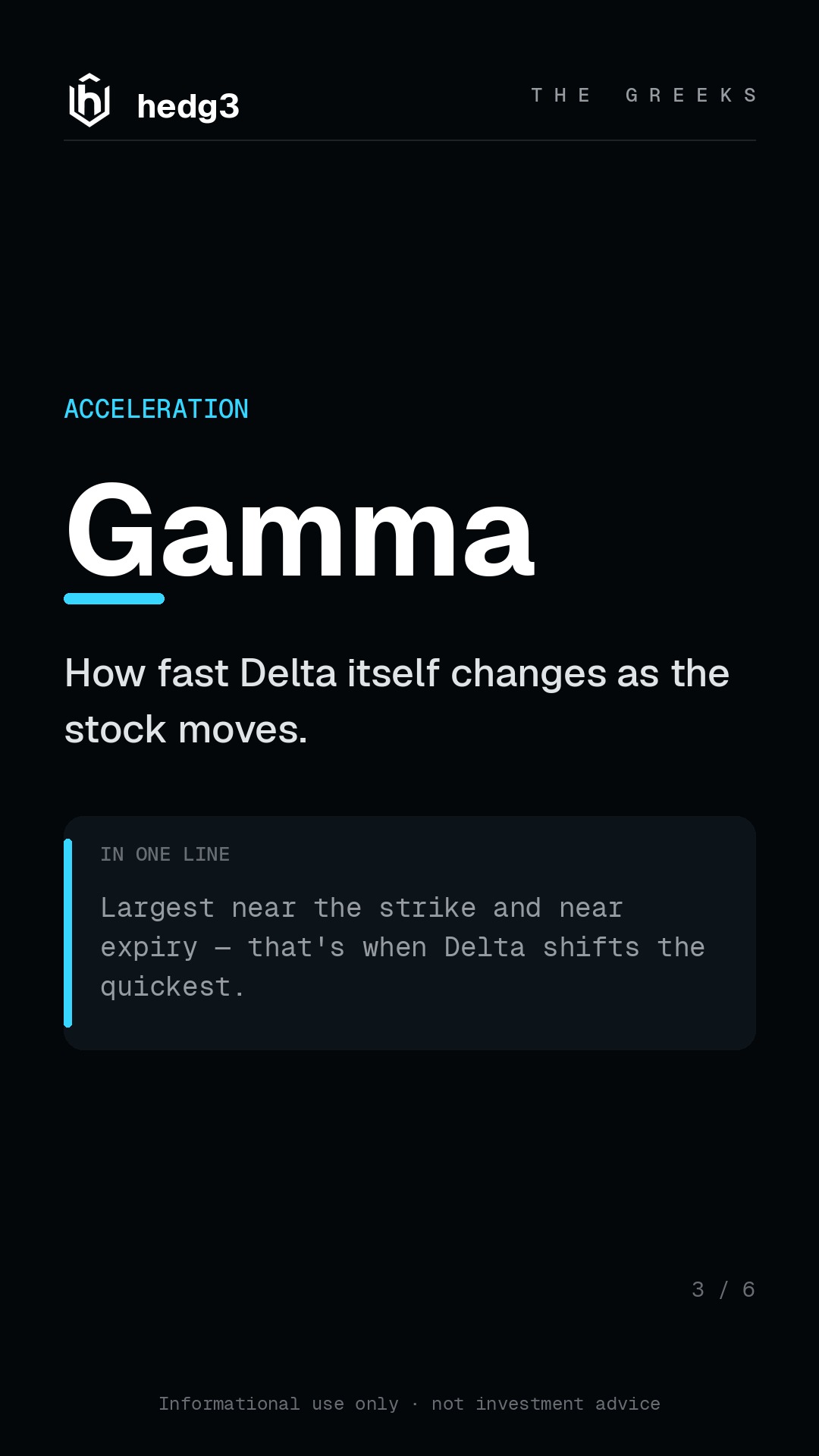
- On a sharp down move, take partial profits — gamma is highest near the strike.
The math
P/L per share at expiry = max(strike − spot, 0) − premium. Break-even = strike − premium. Maximum profit = strike − premium (only if spot goes to zero).
Not investment advice.