Watch the reel
A long straddle buys a call and a put at the same strike to profit from a big move in either direction. This reel shows how it bets on volatility, not on which way a stock breaks.
Long Straddle
Buy an ATM call and an ATM put with the same strike and expiration. You don't care about direction — you profit if the underlying moves far enough either way.
Payoff at expiration
Example legsGreeks
When to use it
You expect a large move but don't know the direction — earnings, FDA decisions, central bank meetings. Best initiated when IV is low relative to the expected move.
Setup
Pick the ATM strike, choose an expiration covering the catalyst, buy both legs as a single combo. The total debit is your risk and the size of the move needed.
Steps
- 1Pick the catalyst date and choose an expiration covering it with buffer.
- 2Select the ATM strike.
- 3Buy the call and put as a single straddle order.
- 4Plan to exit immediately after the event or set a hard stop.
Cost
Debit = call premium + put premium. Maximum loss = debit (occurs if spot lands exactly at strike).
Effect of price
Profitable if spot moves beyond break-even either way; flat is worst-case.
Effect of time
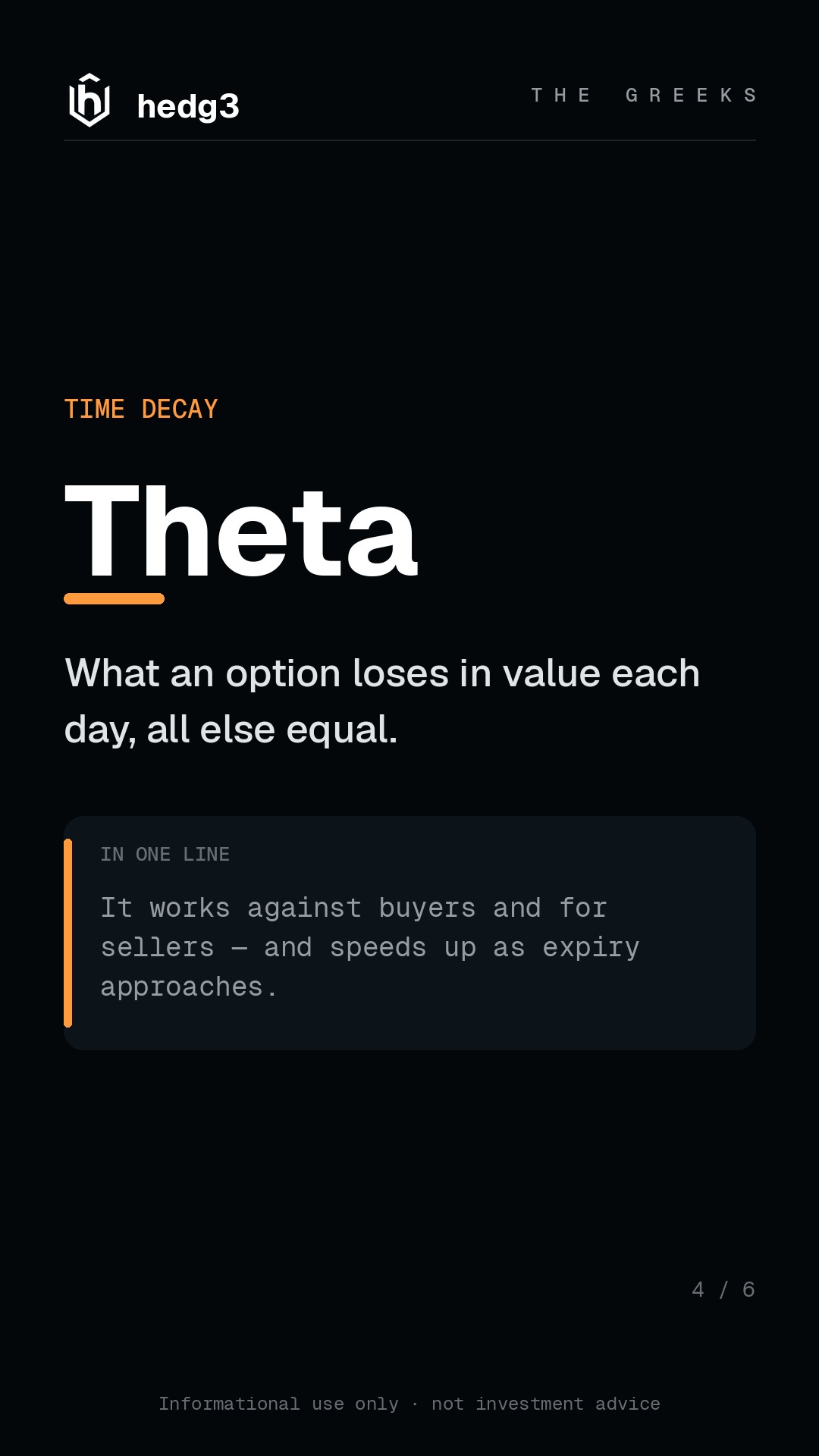
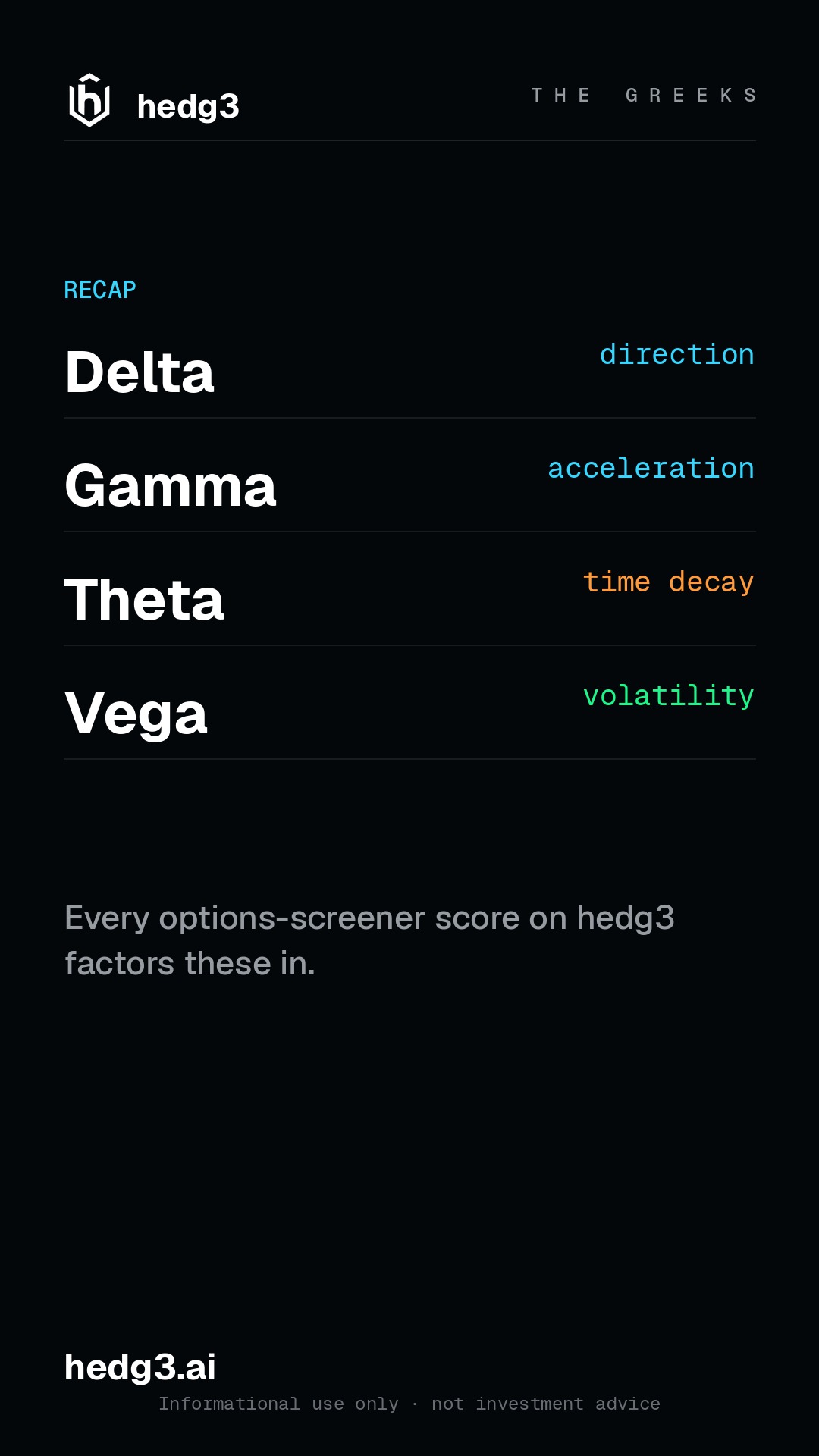
Brutal theta — two long options decaying simultaneously. Hold for as short a window as possible.
Effect of volatility
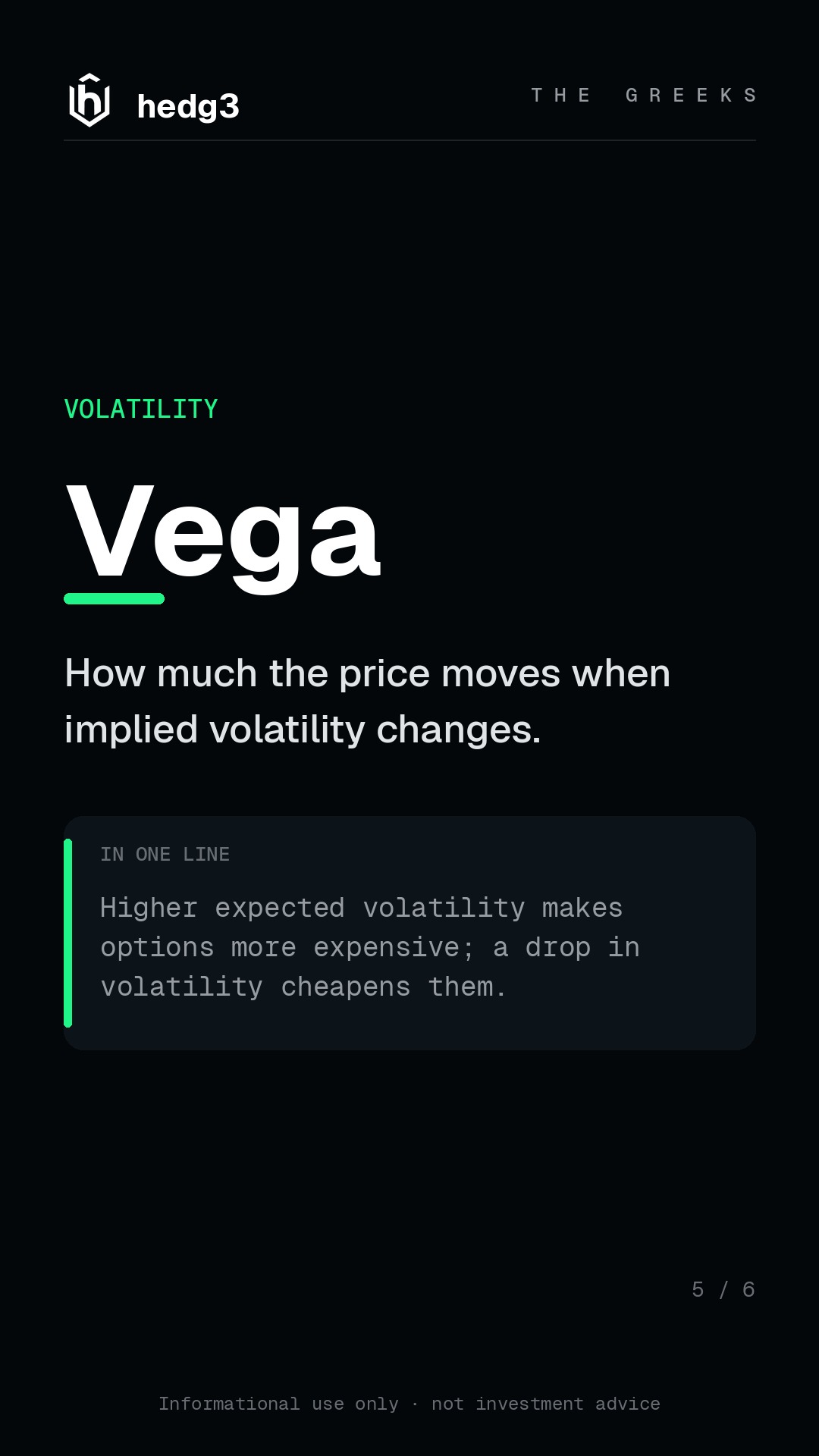
Positive vega — IV rising before the event helps; IV crushing after the event hurts. The post-earnings IV crush is often what kills straddles even when the stock moves.
Pros
- Direction-agnostic.
- Defined, capped loss.
- Pays handsomely on outsized moves.
Cons
- Needs a move that exceeds the implied move (often pre-priced).
- Vol crush often offsets the directional gain.
- Theta is double-strength.
Tips
- Check implied move vs. historical move — if implied is way above historical, the straddle is expensive.
- Exit immediately after the catalyst — don't wait for 'more move.'
- Consider a strangle instead for a cheaper, less symmetric version.
The math
P/L per share at expiry = |spot − strike| − total_debit. Break-evens = strike ± total_debit. Max loss = total_debit (at spot = strike).
Not investment advice.