Watch the reel
A long strangle buys an out-of-the-money call and put to profit from a big move for less than a straddle. This reel shows the trade-off: a cheaper bet on volatility that needs a larger move to pay off.
Long Strangle
Buy an OTM call and an OTM put with different strikes but the same expiration. Cheaper than a straddle but needs an even larger move to pay off.
Payoff at expiration
Example legsGreeks
When to use it
Direction-agnostic on a name you expect to move big — but not so big that you want to pay for ATM optionality. Useful when IV is low and the implied move feels too tight.
Setup
Symmetric strikes around current price work cleanly. Wider wings = cheaper debit but bigger required move.
Steps
- 1Pick the expiration covering the catalyst.
- 2Choose strikes equidistant from the current price (often 0.20 delta each).
- 3Buy the call and put as a single combo.
- 4Plan to exit at/after the catalyst — strangles are not buy-and-hold instruments.
Cost
Debit = call + put premiums. Max loss = debit (occurs if spot lands between the strikes at expiration).
Effect of price
Profitable beyond either break-even. Between the strikes at expiration, both legs expire worthless.
Effect of time
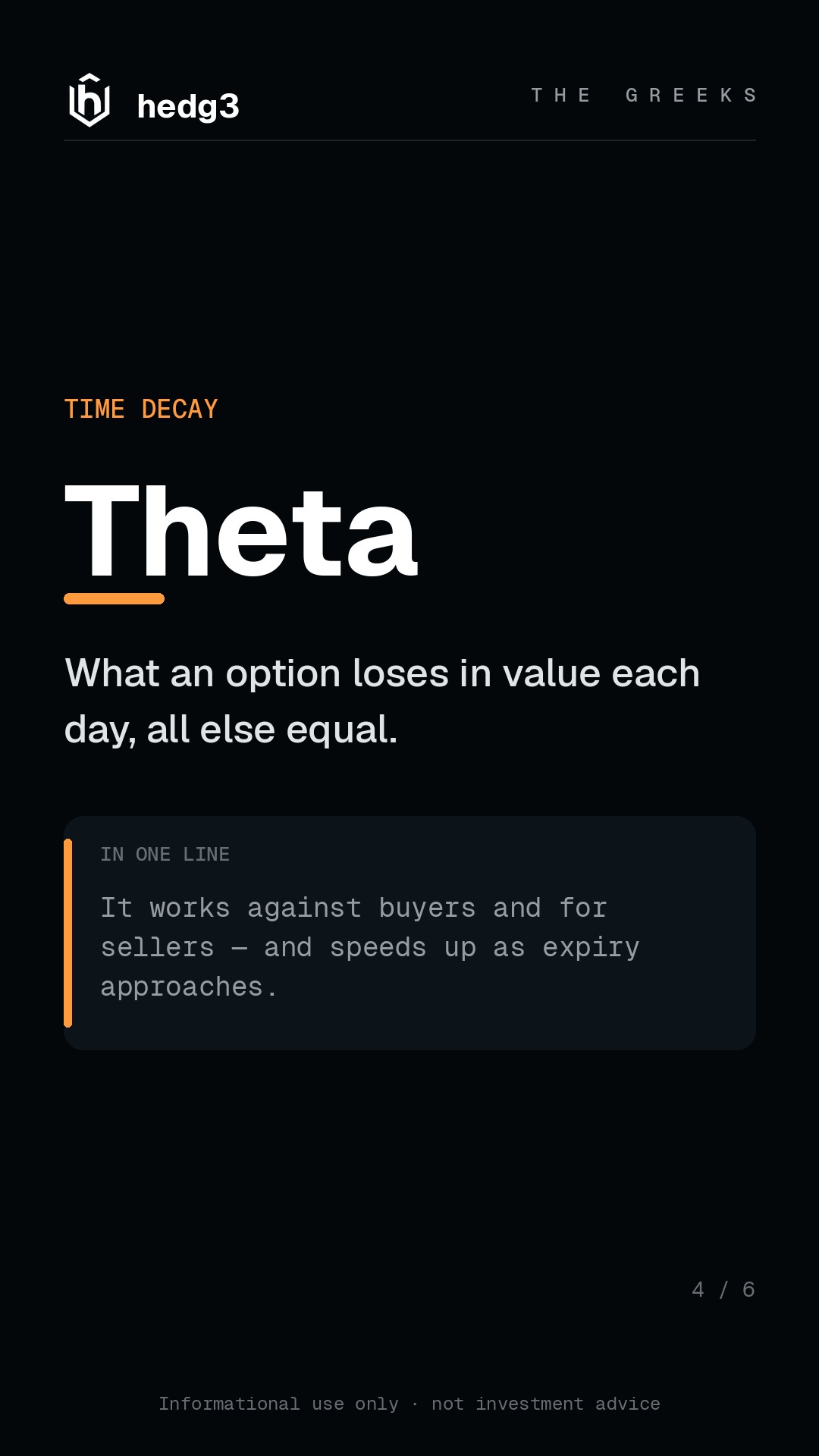
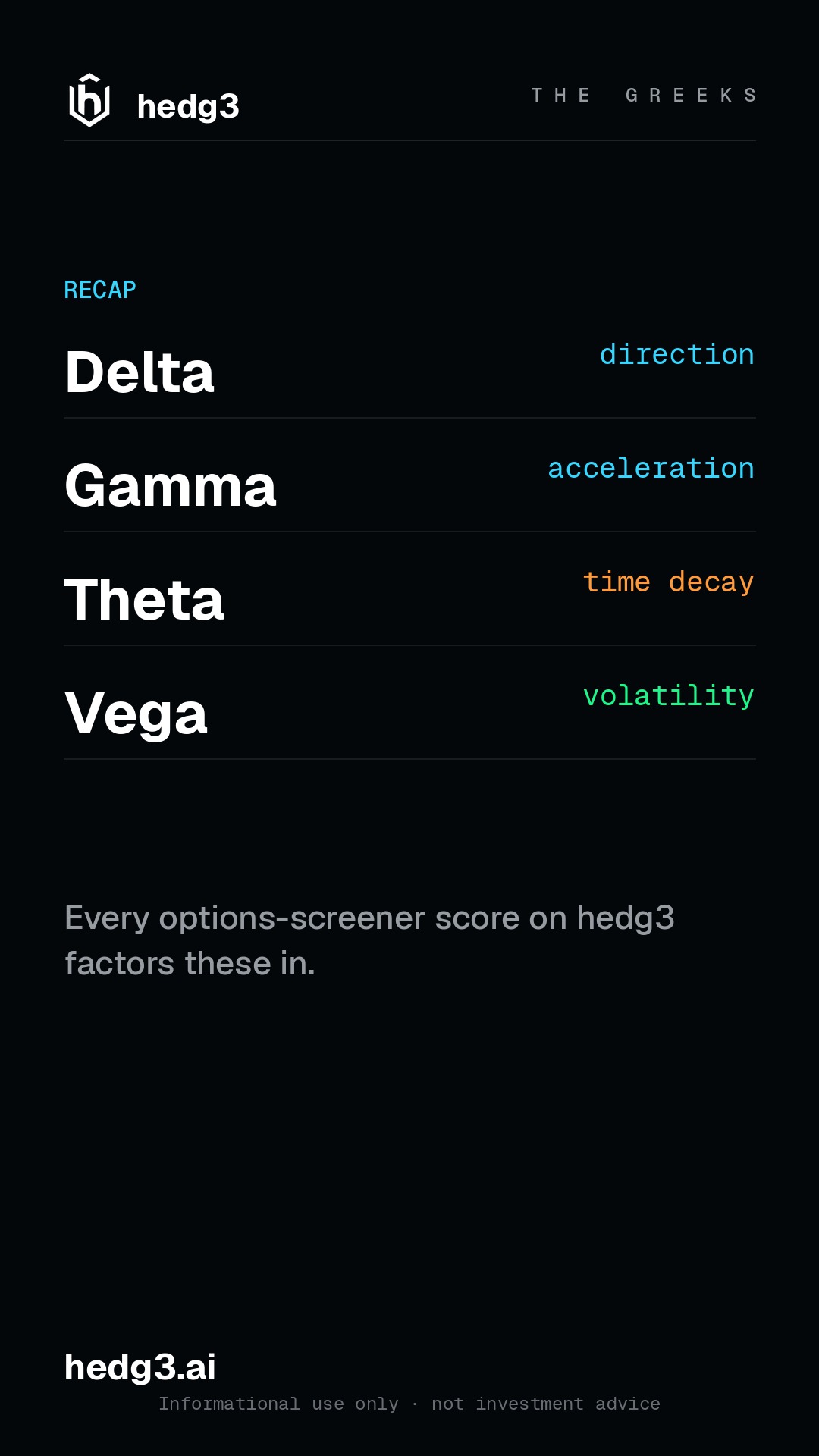
Theta-heavy — two OTM options bleeding daily.
Effect of volatility
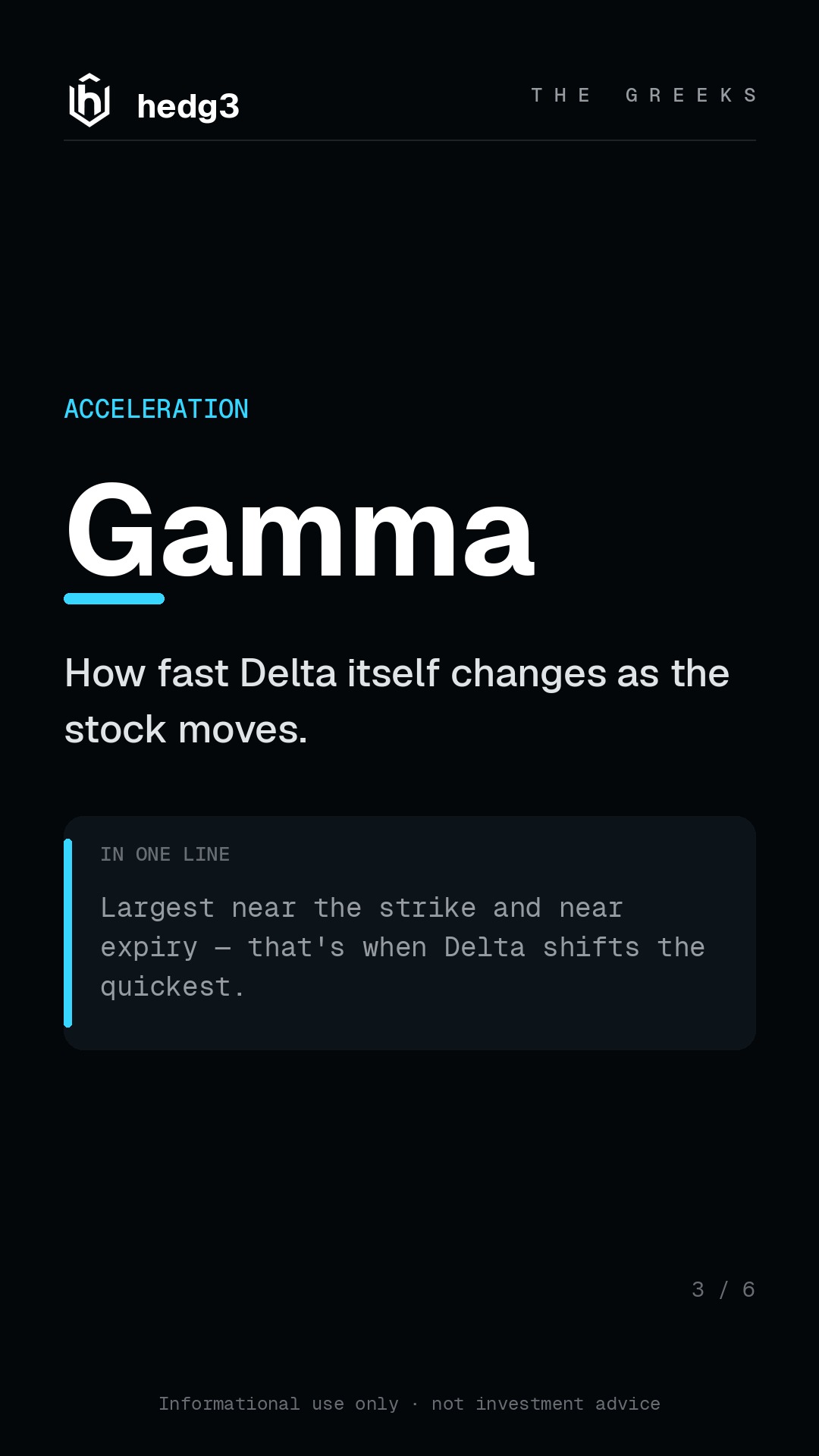
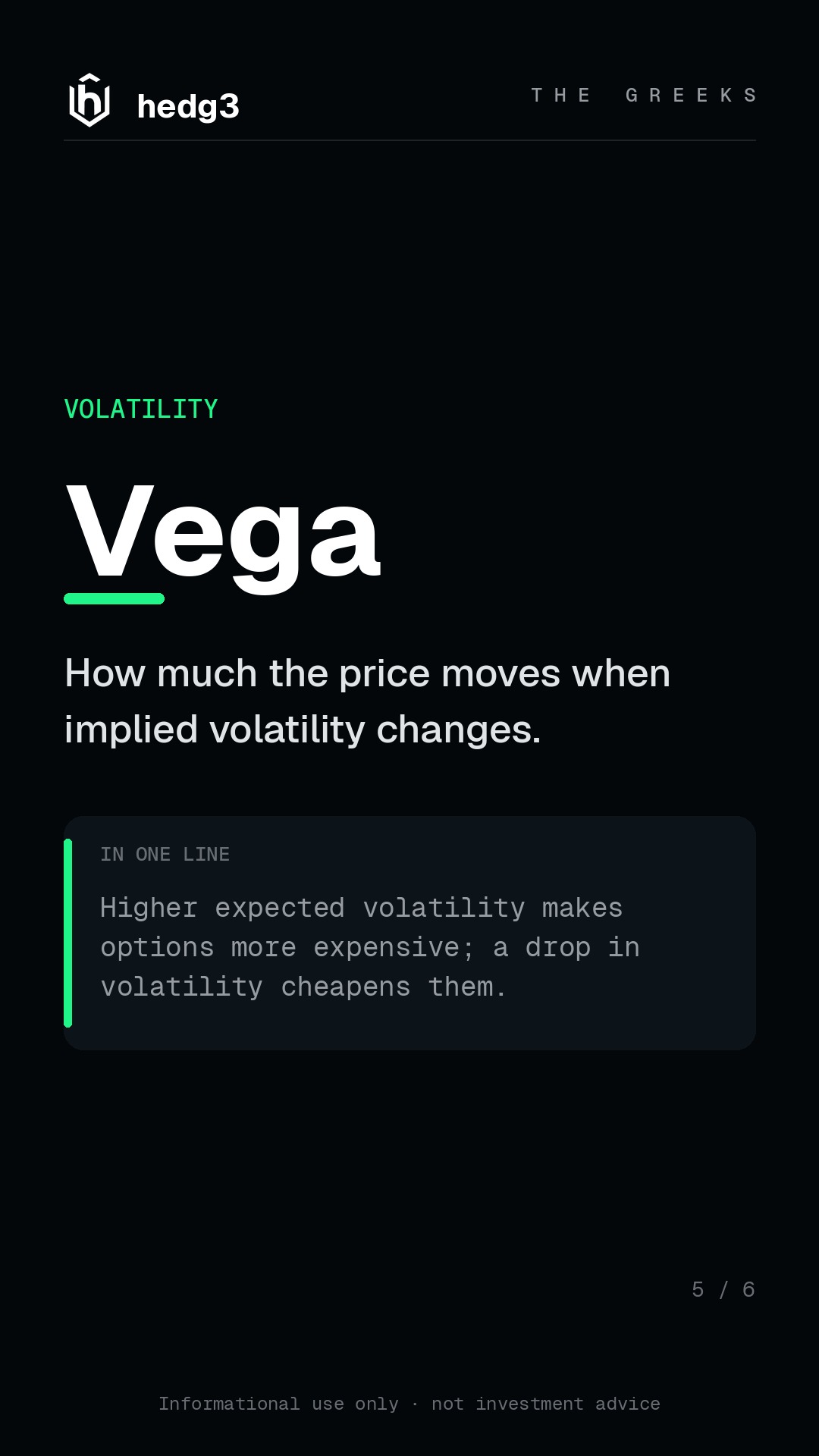
Positive vega. Strangles love rising IV pre-event; the post-event crush is your enemy.
Pros
- Cheaper than a straddle.
- Direction-agnostic.
- Defined loss.
Cons
- Larger required move than a straddle.
- Vol crush is often decisive after earnings.
- Both legs bleed simultaneously.
Tips
- Pick strikes based on historical move, not implied — if you're buying inside the implied move, you're paying full freight.
- Don't let it ride past the catalyst.
- Beware of low-liquidity wings — wide spreads will eat your edge.
The math
P/L per share at expiry = max(0, spot − call_strike) + max(0, put_strike − spot) − debit. Break-evens = call_strike + debit, put_strike − debit.
Not investment advice.