Watch the reel
A protective put pairs shares you own with a put that floors your downside — insurance on a position. This reel covers what that protection costs and when it's worth paying for.
Protective Put
Own 100 shares of the underlying and buy a put against them. The put is insurance — it limits your downside below its strike for the cost of the premium.
Payoff at expiration
Example legsGreeks
When to use it
You're long the stock, you don't want to sell (tax, conviction, dividend), and you want defined downside through a known event (earnings, FDA, Fed) or a fragile macro window.
Setup
Pick a put strike at the maximum loss you can stomach (often 5–10% OTM). Expiration should cover the catalyst plus some buffer. Be honest about the insurance cost — over time it's a drag on returns.
Steps
- 1Pick the strike at the floor you want for your downside.
- 2Choose an expiration that covers the catalyst window.
- 3Buy the put as a limit order at or below the mid.
- 4Decide in advance whether you'll roll or let it expire after the event.
Cost
You pay the put's premium. Total breakeven moves up by that premium.
Effect of price
Above the put strike, you have full stock upside minus the premium drag. Below the strike, your losses are capped — the put's intrinsic value offsets the stock's decline.
Effect of time
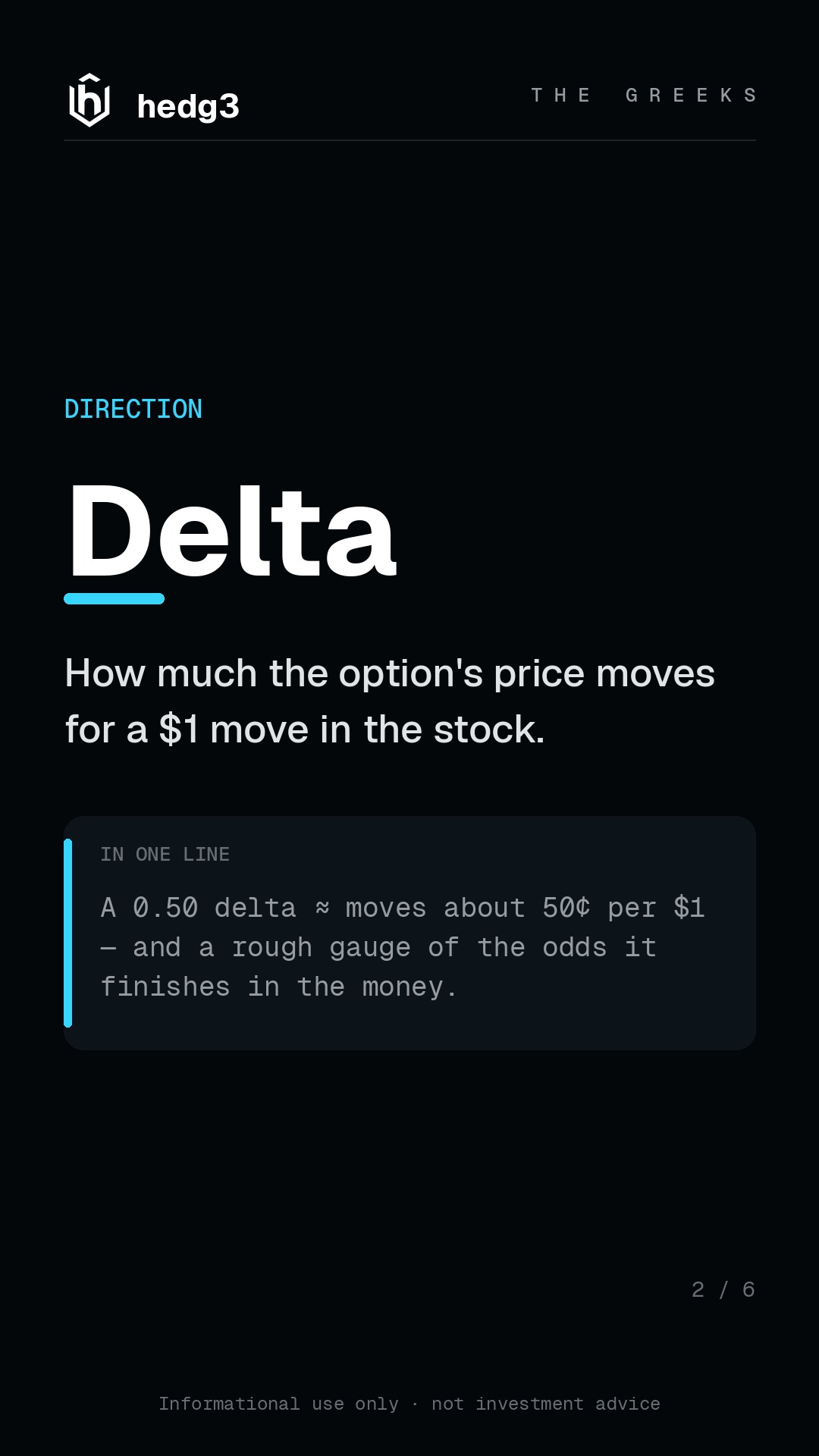
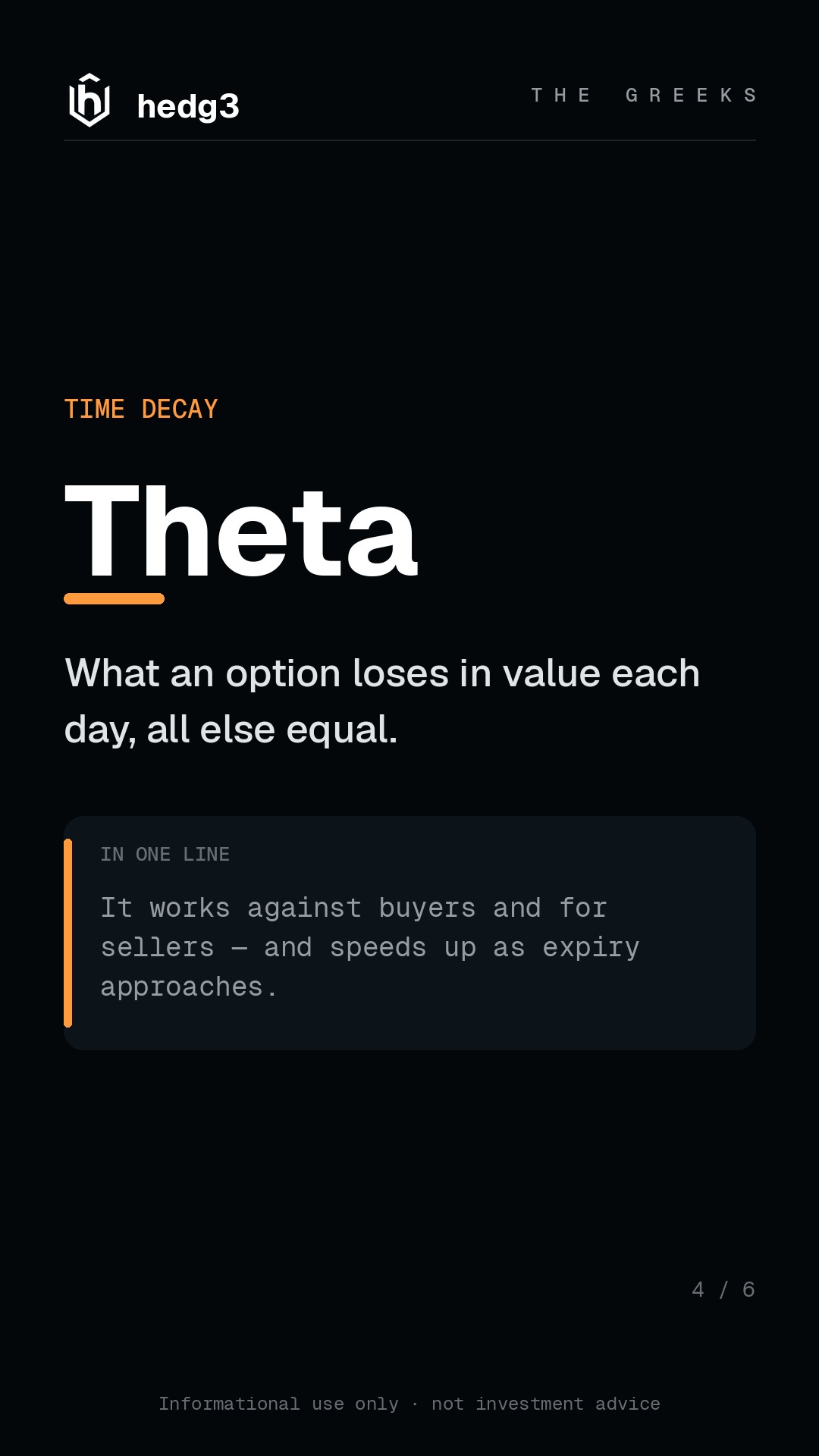
Theta is a drag. The longer your insurance sits unused, the more it costs.
Effect of volatility
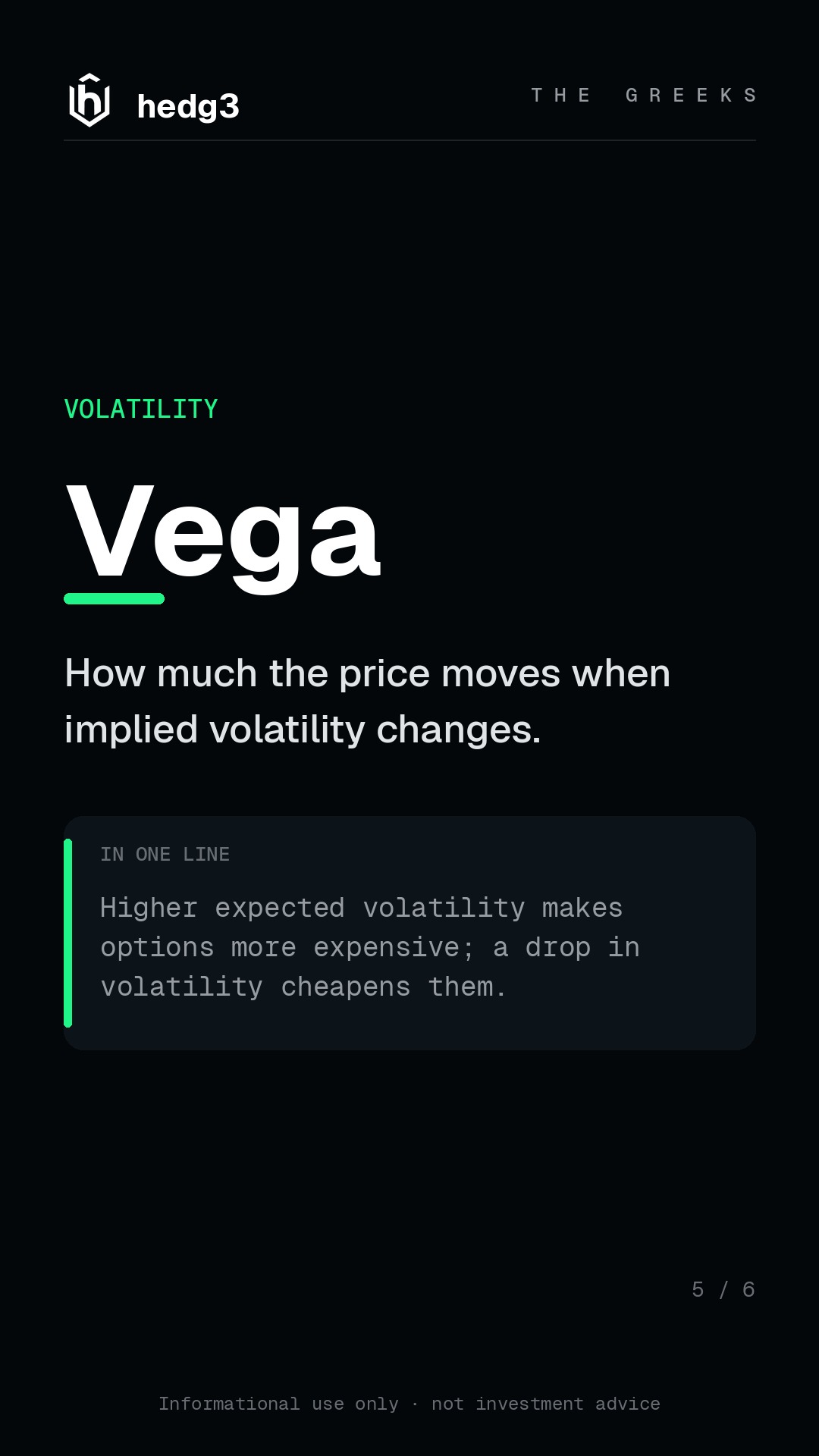
Positive vega — a vol spike during a sell-off is partial compensation. Buying insurance when IV is already elevated is expensive.
Pros
- Defined downside while keeping full upside (minus premium).
- Don't have to sell the stock — keeps your basis, dividends, voting.
- Mental clarity through a known event window.
Cons
- Insurance is expensive in the long run.
- Continuous protection requires continuous rolling.
- Most events resolve without the put paying off — the premium is gone.
Tips
- Buy insurance when nobody else wants it (low IV), not after the panic.
- For long-horizon hedges, longer-dated puts and roll forward — they decay slower.
- Consider a collar (add a short call) to finance the put cost.
The math
P/L per share at expiry = (spot − basis) + max(strike − spot, 0) − premium. Maximum loss = basis − strike + premium (any spot ≤ strike). Break-even = basis + premium.
Not investment advice.