Watch the reel
A short straddle sells a call and a put at the same strike to collect premium when a stock stays still — but the loss is uncapped. This reel covers why it's an experienced-trader strategy.
Short Straddle
Sell an ATM call and an ATM put with the same strike and expiration. You collect a large credit but take on undefined risk in both directions.
Payoff at expiration
Example legsGreeks
When to use it
Strong belief in a pin near the strike, very high IV that you expect to crush, and a portfolio large enough to absorb tail risk. Not for retail.
Setup
Sell ATM call + ATM put as a single combo. Margin requirement is substantial.
Steps
- 1Confirm you have the buying power and risk tolerance for undefined risk.
- 2Pick the ATM strike.
- 3Sell the call and put as a single straddle order.
- 4Define your adjustment plan in advance (delta-hedge, roll, close).
Cost
You collect a large credit. Max loss is theoretically unbounded above (short call) and large below (down to zero on the short put).
Effect of price
Max profit at the strike. Losses accelerate quickly on either side beyond the break-evens.
Effect of time
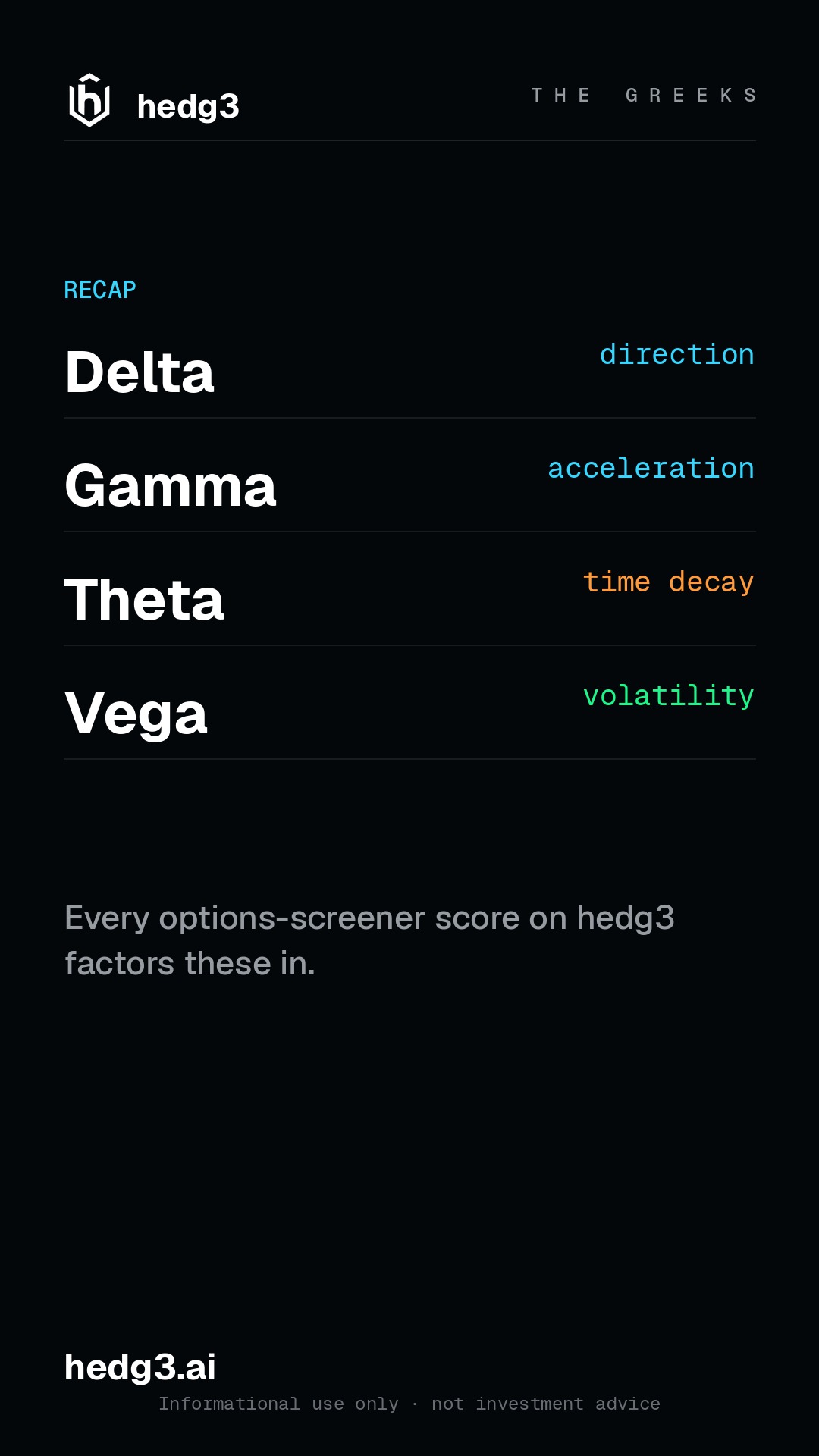
Theta-positive — your engine.
Effect of volatility
Negative vega — open in elevated IV.
Pros
- Large credit collected.
- High theta.
- Profits from mean-reverting vol.
Cons
- Undefined risk both ways.
- Single big move can blow up months of gains.
- Margin-intensive and emotionally taxing.
Tips
- Never on a name with a near-term binary event.
- Close at 25–40% of max profit — don't be greedy.
- If you must do this, do it as a 1/contract single ticker — never lever multiple short straddles.
The math
P/L per share at expiry = total_credit − |spot − strike|. Break-evens = strike ± credit. Max loss = unbounded above, strike − credit below.
Not investment advice.