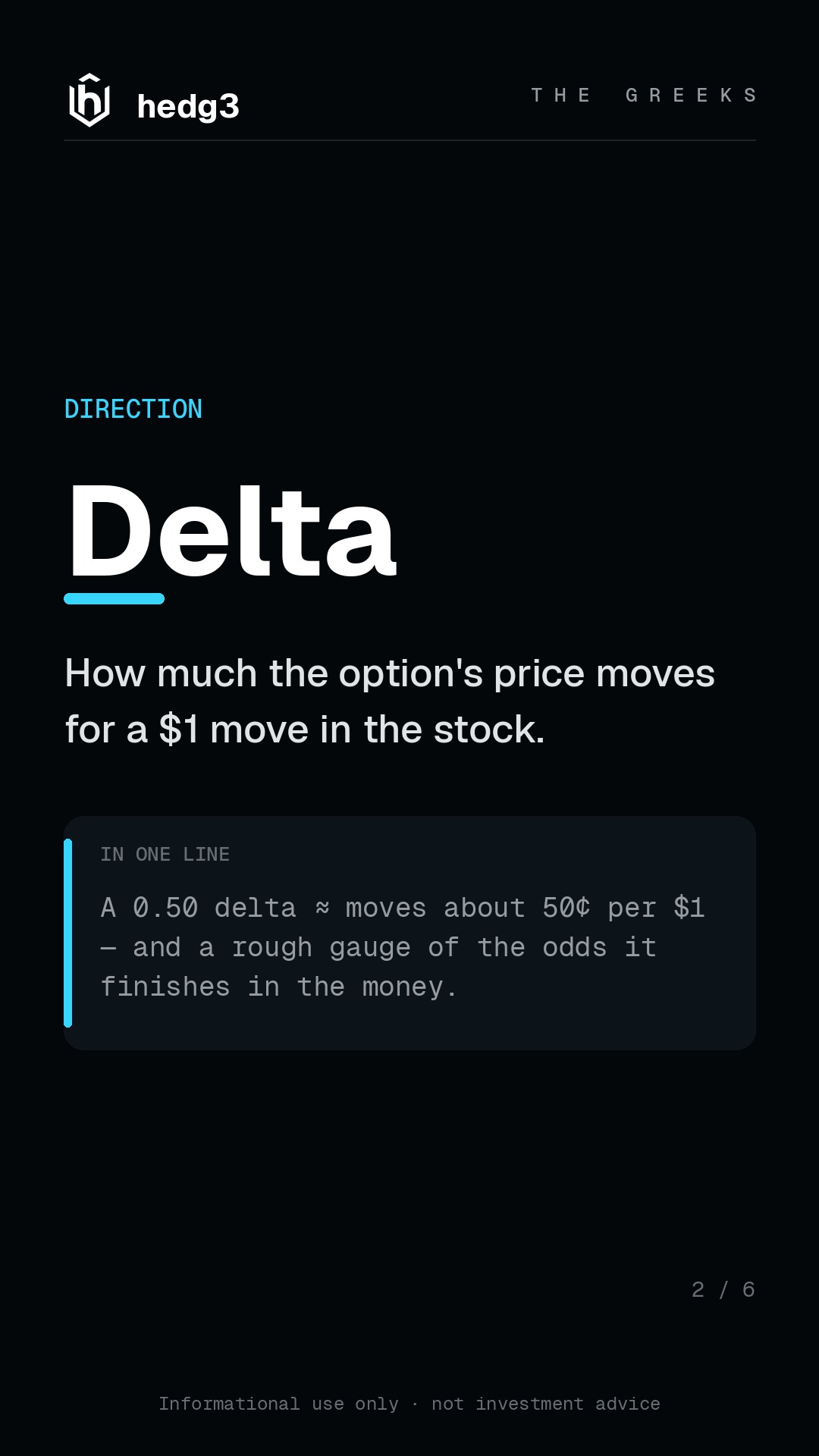
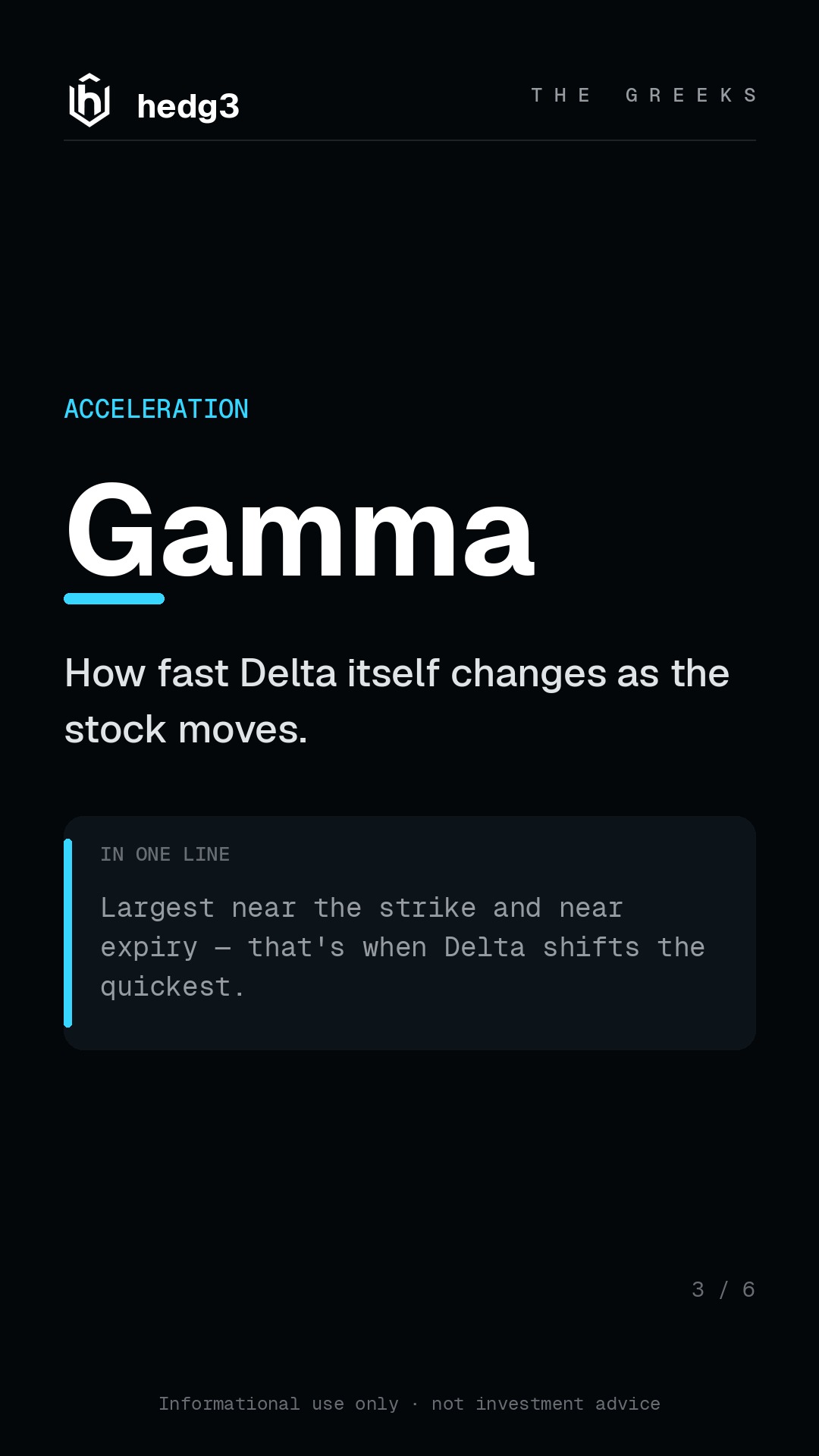
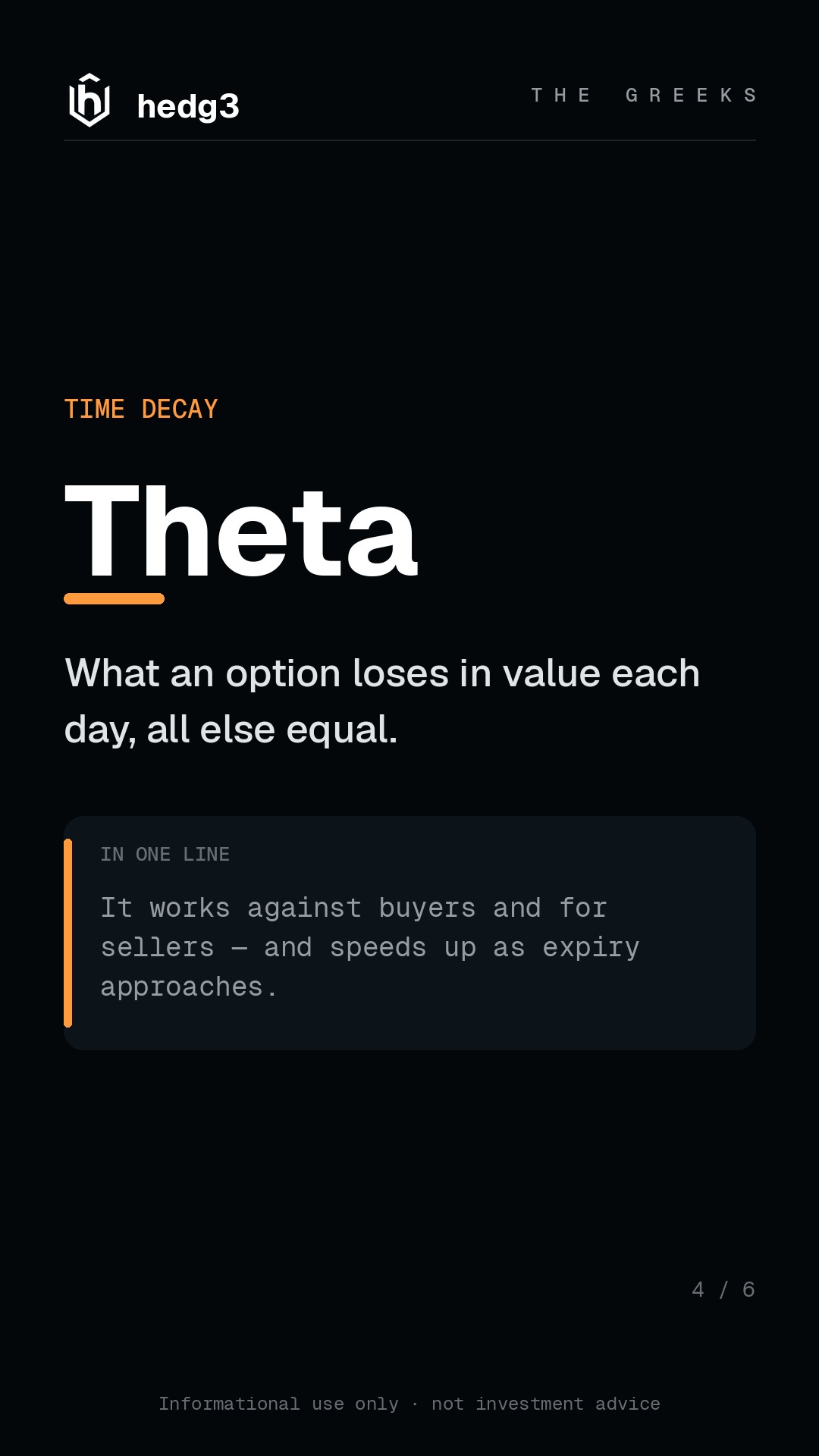
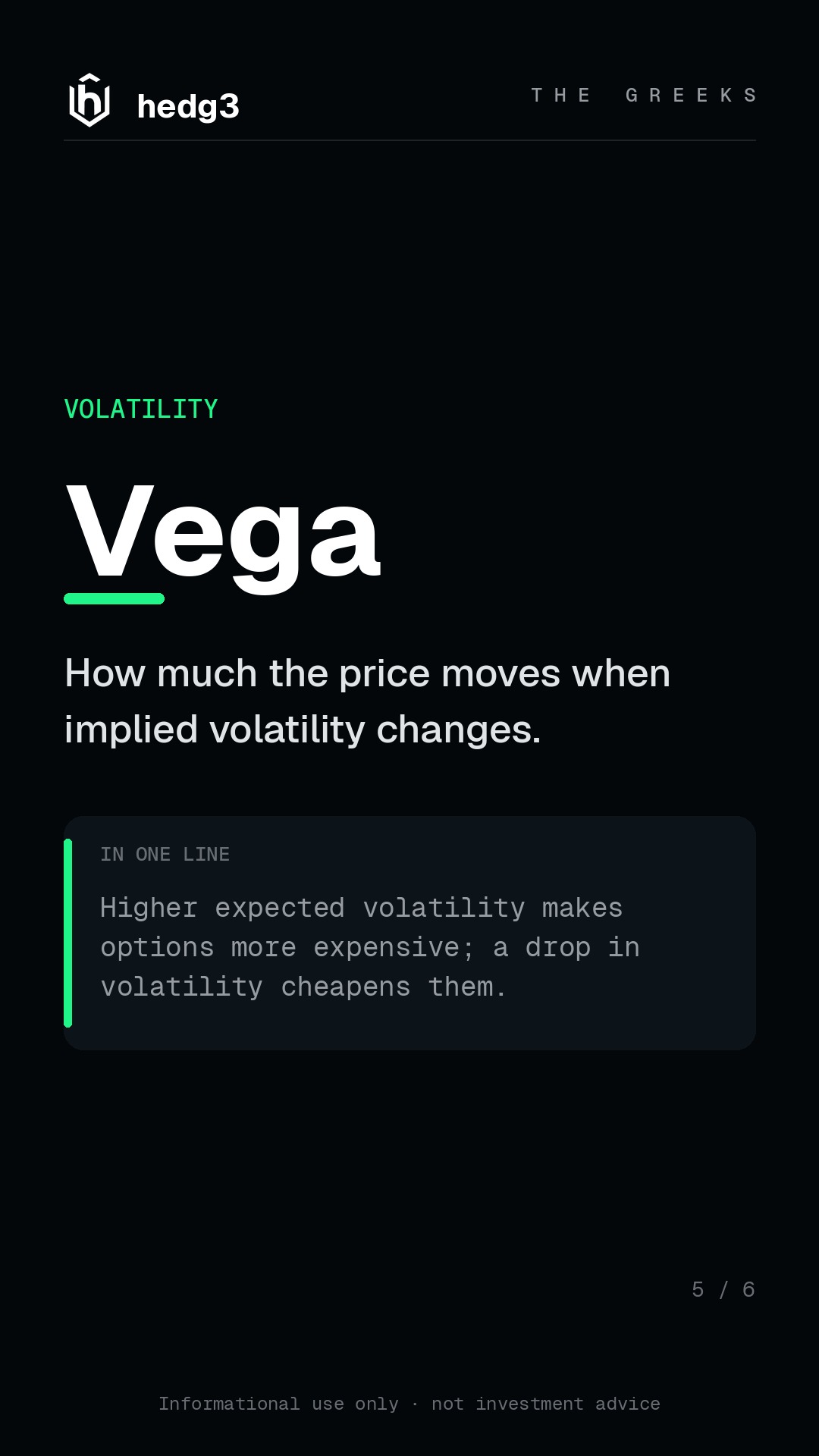
Watch the reel
A short strangle sells an out-of-the-money call and put for a wider profit range than a straddle — still with uncapped risk. This reel shows the income-versus-risk trade-off.
Short Strangle
Sell an OTM call and an OTM put. Smaller credit than a short straddle, wider profit zone, still undefined risk.
Payoff at expiration
Example legsGreeks
When to use it
High IV, no near-term catalyst, and a portfolio with capacity for undefined-risk trades. The canonical 'sell premium and harvest theta' position.
Setup
Sell calls and puts at 0.15–0.20 delta. Wider strikes = lower credit but bigger safety buffer.
Steps
- 1Confirm margin + risk tolerance.
- 2Pick an expiration 30–45 DTE.
- 3Sell call at 0.15–0.20 delta.
- 4Sell put at 0.15–0.20 delta.
- 5Plan your adjustment rules in writing.
Cost
Net credit. Max loss is undefined above (short call) and large below (short put).
Effect of price
Max profit between the strikes. Losses accelerate beyond the break-evens.
Effect of time
Theta-positive.
Effect of volatility
Negative vega — favorite of high-IV mean-reversion traders.
Pros
- Wider profit zone than a short straddle.
- High win rate.
- Theta-positive.
Cons
- Undefined risk both ways.
- Tail events can wipe out months of premium.
- Margin-heavy.
Tips
- Avoid earnings.
- Close at 50% of max credit.
- Manage tested side — roll the untested side to recenter, or roll the tested side out and away.
The math
P/L per share at expiry = total_credit − max(0, spot − call_strike) − max(0, put_strike − spot). Break-evens = call_strike + credit, put_strike − credit.
Not investment advice.